The product label sets the clock.
How long after pest control should kids and pets stay out? For sprays, the EPA’s general rule is until the treated area has dried, and the label can add more specific directions. The person who did the work should tell you which areas need time to dry. At Liberty, your technician tells you if a treated area needs time to dry before kids or pets use it, and the products are chosen with children and pets in mind from the start.
Key Takeaways
- Roaches, fire ants, and mosquitoes carry real risks for a family. Cockroach droppings are a known asthma trigger, according to the EPA.
- Children and pets spend their days on floors and lawns, which puts them closer to anything applied there.
- The EPA says to keep children and pets out of treated areas until the spray has dried. The label has the final word.
- A family friendly plan treats outside first, goes inside only for an active problem, and tells you plainly when a treated area is ready again.
- Liberty chooses products with children and pets in mind, applies them by the label, and treats the exterior of your home first.
The Pests Are a Family Problem Too
Most parents who call about pests are weighing two worries at once. One is the treatment. The other is the bugs, and that one deserves equal time.
Start in the kitchen. UF/IFAS names food, water, and shelter as what German cockroaches need to thrive, and a kitchen offers all three. The EPA lists the droppings and body parts of cockroaches and other pests as asthma triggers. UF/IFAS adds a detail every parent of a school age child should hear. Kids can carry cockroaches home from school in book bags and lunch containers. Our guide to German cockroaches in Florida kitchens covers how to tell them apart from the big palmetto bugs that wander in from the yard.
Then step outside. Fire ants frequently invade home lawns and school yards, UF/IFAS reports, which is the ground where a toddler sits down without looking. A sting leaves a white pustule, usually by the next day. Reactions range from local pain and swelling all the way to anaphylactic shock. Our post on fire ants in a Florida yard walks through the warning signs.
Mosquitoes round it out. CDC names dengue and West Nile among the illnesses mosquito bites can spread. After a week of afternoon storms, a forgotten kiddie pool on the lanai holds plenty of water for them.
So leaving the pests alone carries its own risk. The health risks of common household pests go beyond these three.
Why Kids and Pets Get More Exposure Than You Do
Here is the other worry, and it is a fair one.
The National Pesticide Information Center (NPIC) explains why children can take in more pesticide than adults from the same room. They spend more time close to the ground, touching baseboards and lawns. Young children put fingers, toys, and other objects in their mouths. Infants take more breaths per minute. Children eat and drink more for their body weight than adults do, and an infant’s brain, nervous system, and organs are still developing after birth.
Now picture the dog. He sleeps on the tile by the slider, rolls in the grass by the fence, and noses along every baseboard on the way to his bowl. A cat spends the afternoon on the windowsill. Your pets live at the same height as your toddler, and in the same places.
NPIC is candid about the core fact that every pesticide is toxic if the exposure is high enough. Risk comes from toxicity and exposure together. The EPA says something similar on its asthma page, noting that insecticides can harm people too, and it recommends pest management methods that pose less risk.
That pair of facts is the whole case for planning. You cannot change a product’s toxicity at the kitchen table. You can change where it goes, how much goes there, and who walks on it before it dries.
How Long After Pest Control Kids and Pets Should Wait
The label decides. Federal law makes it a violation to use a pesticide in a manner inconsistent with its labeling, and the EPA sums that up plainly. The label is the law.
For sprays, the EPA’s general instruction is plain. Do not allow children or pets into treated areas until the pesticide spray has dried. NPIC adds, for pets, that the area should be completely dry and well ventilated, and that the label may contain more specific instructions.
Granules play by different rules. NPIC notes that some granular lawn products may require keeping pets off the treated area for 24 hours or longer.
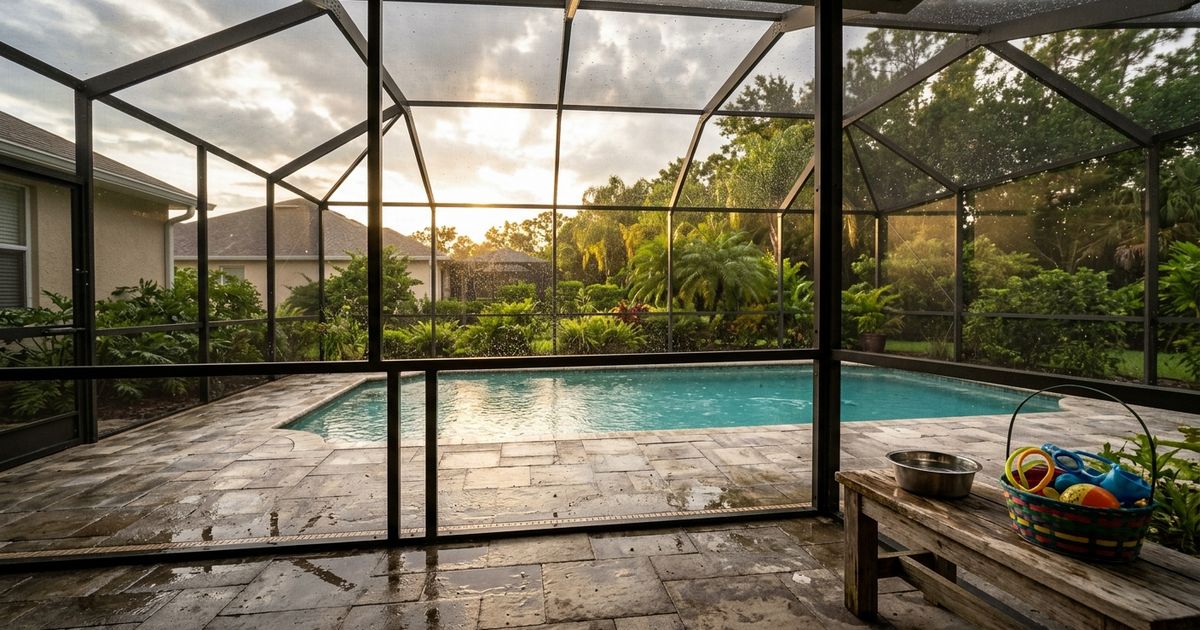
Florida weather complicates “dry.” A shaded pool deck dries slower than a sunny driveway. A screened lanai on a still, humid afternoon can stay damp along its edges well after the middle looks finished, and those edges are exactly where a crawling baby or a dog will be. That is why a stopwatch number from the internet helps less than a clear answer from the person who did the work and knows where the product went.
Is Pest Control Safe Around Kids and Pets?
No honest company can answer that with a flat yes. The answer depends on which product is used, where it goes, and whether the label is followed to the letter.
Signal words on a label do not settle it either. NPIC explains that CAUTION, WARNING, and DANGER describe a product’s acute, short term toxicity. CAUTION is the lowest of the three, and NPIC still says every product has the potential to poison at high doses.
What a parent can judge is the approach. Those choices decide how close a treatment ever comes to your family.
What a Family Friendly Approach Looks Like
A family friendly pest control plan starts with the house, then works inward only as far as the problem requires. Here is what that means in practice.
- Products picked for the household. The choice is made with children and pets in mind, before anything is mixed.
- Registered products, applied by the label. The label is the law, so the instructions you hear match what is printed on it.
- Outside first. Treating at the foundation keeps the work out of the rooms where your kids play.
- Inside only for an active problem. Interior treatment answers a real infestation, not a hypothetical one.
- A plain answer before anyone leaves. You hear which areas need to dry before kids or pets use them, so nobody is guessing.
- A plan built for your home. A house with a crawling baby and a beagle is different from one with two teenagers and a fish tank.
The EPA adds one more test for any company. Reliable applicators will show you their credentials and can provide copies of the pesticide labels.
How Liberty Plans Treatment Around Your Family
That checklist describes how Liberty works. We are family owned, based in Odessa, and have served families in Hillsborough, Pasco, and Pinellas since 2007.
We choose products with children and pets in mind. The choice is made before anything reaches your home, so you are not the one researching active ingredients at midnight.
Everything we apply is EPA registered and applied according to its label. For you, that means every application follows the directions printed on the product, and we are licensed by the state of Florida under JB-151032.
We treat the exterior of your home first. The goal is to keep ants, roaches, and spiders at the foundation, before they reach the kitchen floor and the playroom. That first line of treatment is outside the walls, not in the rooms where your family eats and sleeps. Our environmentally friendly treatments follow that same order, outside first, inside only when needed, applied by the label.
Interior treatment happens only when there is an active pest issue. If roaches are already in the kitchen, we treat the kitchen. If they are not, the inside of your home stays out of it. Our cockroach control and ant control plans both start with an inspection to find out which one you have.
Your technician tells you if a treated area needs time to dry before kids or pets use it. You hear it from the person who treated your house, so nobody is guessing about the dog and the lanai.
If your home has in-wall tubing, treatment stays inside the walls. With in-wall pest tubing, treatment goes into the wall voids, not into the living space where your children and pets spend the day.
Your plan is personalized. Every service begins with an inspection, and the plan fits what we find and who lives there, whether the problem is roaches, ants, fleas, mosquitoes, or another Florida pest. Our pest control FAQ answers the children and pets question directly, and our about page tells you who we are.
What You Can Do at Home
A few habits cut exposure further, and they cost nothing.
Before a visit, pick up toys, chew bones, food bowls, and pet bedding from the areas being treated, as NPIC advises. The EPA says a fish tank should be moved out of the treatment area or covered with heavy plastic, with the air pump turned off. Our post on pest control for pet owners has the fuller treatment day list.
Store bought products deserve the same care. NPIC says to keep pesticides in their original containers, out of children’s reach, and never in a food or drink container. The EPA recommends safety latches on cabinets and a quick crawl through the garage on your hands and knees to see it from a child’s height. It also notes that flea and tick products used on pets can transfer to children. Over applying a store bought spray creates its own problems, covered in our post on the dangers of DIY pest control.
Outside, CDC recommends emptying anything that holds water once a week. Tip out the toys, the kiddie pool, and the flowerpot saucers on the lanai.
If you think a child has swallowed or touched a pesticide, call Poison Help at 1-800-222-1222. The call is free and confidential. For a pet, call your veterinarian.
If roaches, ants, or fire ants have moved in and you want a plan built around your kids and pets, ask us for a free quote. Tell us who lives in the house, and we will build a plan personalized to your home.
Liberty Pest Management serves the Tampa Bay area including Pasco, Hillsborough, and Pinellas counties, from Odessa and Land O’ Lakes to Tampa, Brandon, and Clearwater. Licensed by the Florida Department of Agriculture (JB-151032). Call us at 813-961-2627 or get a free quote today.