Two houses eight miles apart in Hillsborough County can have completely different pest problems, and the reason is rarely landscaping or housekeeping. It is the decade each was built.
Hillsborough contains every era at once. Bungalows from the 1920s in Seminole Heights. Ranch blocks from when Original Carrollwood broke ground in 1959. Subdivisions from the boom decades. And in Riverview, where most homes postdate 2000, sod that went down last month.
Each era has a characteristic weak point, and each weak point has a pest that specializes in it. It is the pattern behind most of our pest control work across Hillsborough County, and once you know your era, you can stop treating pest pressure as random bad luck and start predicting it.
Key Takeaways
- Homes built before roughly 1960 fail from below: crawl spaces and aging drain lines let American cockroaches, silverfish, and rats in at ground level
- Midcentury ranch homes fail at accumulated penetrations, decades of cable runs and AC retrofits adding up to an entry map a new build cannot yet have
- Boom decade homes are hitting the age where seals and soffits ask for attention, which is a maintenance window, not a defect
- New construction gets pests anyway: fire ants in fresh sod, wasps on unweathered eaves, rodents displaced by the clearing next door
- The oak canopy overrides everything. A limb touching the roofline is a rodent highway regardless of build year
Why Build Decade Predicts Pests Better Than Address
A pest is not choosing your house. It wants a way in and a place to stay, and construction practice decides both. Foundations moved from piers to slab. Soffits went from open wood to vented aluminum. Each change closed a door and opened a different one. A 1920s house is not worse than a 2020 house at keeping pests out. It is worse at some things and better at others.
The second variable is time. Fifty years of small repairs leaves fifty small holes. That is arithmetic, not a criticism of the house. Below are the four eras that make up most of Hillsborough’s housing. Find yours.
The 1920s Bungalow: It Breathes Through Its Floor
Seminole Heights is the showcase, streets of restored Craftsman bungalows shaded by grand oaks along the Hillsborough River. Temple Terrace’s Mediterranean Revival core dates to the same window, laid out in the early 1920s alongside what was then the world’s largest orange grove.
The characteristic failure is the crawl space. Many of these houses sit on pier and beam foundations, and the space underneath is a climate of its own: humid, dark, guarded only by vent screens installed generations before anyone thought about pest exclusion. Every plumbing penetration through the floor is a doorway. Rats nest there, roaches breed there, and silverfish live on the damp wood above.
The characteristic pest is the American cockroach, the big one people here call a palmetto bug. Drain lines a century old develop the joint gaps and dried traps that let them travel up from sewer infrastructure into a bathroom overnight. This is why cockroach control in the historic core starts at the drains, not the baseboards. The roach on the tile did not walk in the front door.
What actually matters between visits: dry the house out. Keep gutters clear so runoff leaves the perimeter instead of soaking the ground under the floor, and grade soil away from the skirting where it has slumped. Run water into any rarely used floor drain every few weeks so the trap stays full, closing one of the routes a palmetto bug uses. Our guide on moisture and pest problems applies double to a house that breathes through its floor.
Remodels are pest events here too. Opening walls disturbs populations settled for decades, and the most valuable visit anyone makes to a bungalow is between demolition and drywall, when treatment reaches voids that then stay sealed for a generation. Pest control in Tampa covers these neighborhoods in detail.
The Midcentury Ranch: Sixty Years of Small Holes
Original Carrollwood broke ground in 1959 on former orange groves around Lake Carroll, and Carrollwood Village followed across Dale Mabry through the 1970s. Brandon’s older core carries fifty year old rooflines under a canopy that has had the same fifty years to mature. These are solid homes, and their pest profile has almost nothing to do with build quality.
The characteristic failure is accumulated penetration. Cable runs, AC retrofits, water heater swaps, a dryer vent moved in 1988. None is a problem alone. Together they are an entry point map a new build has not had time to draw. Exclusion pays off more on a midcentury ranch than any other era here, because you are closing doors opened one at a time over six decades.
The characteristic pest is the roof rat. Drain systems from the 1960s develop the same below grade access the bungalows have, so American roaches stay on the list. But the ranch belt’s signature is the rat, because these neighborhoods have the canopy. A roof rat travels limbs, fences, and utility lines straight to a roofline without touching the ground. Once there it needs a gap roughly as wide as a quarter. Your roofline is either tight to that measurement or it is not, and there is little middle ground.
Those same trees are also a pantry. Older Hillsborough yards tend to hold aging citrus or palms, and a rat can eat well off them through most of the calendar. A producing orange tree is at its most useful in the cool months, which are also the months it wants an attic. Rodent pressure on these streets never gets the lean winter homeowners from colder states are braced for.
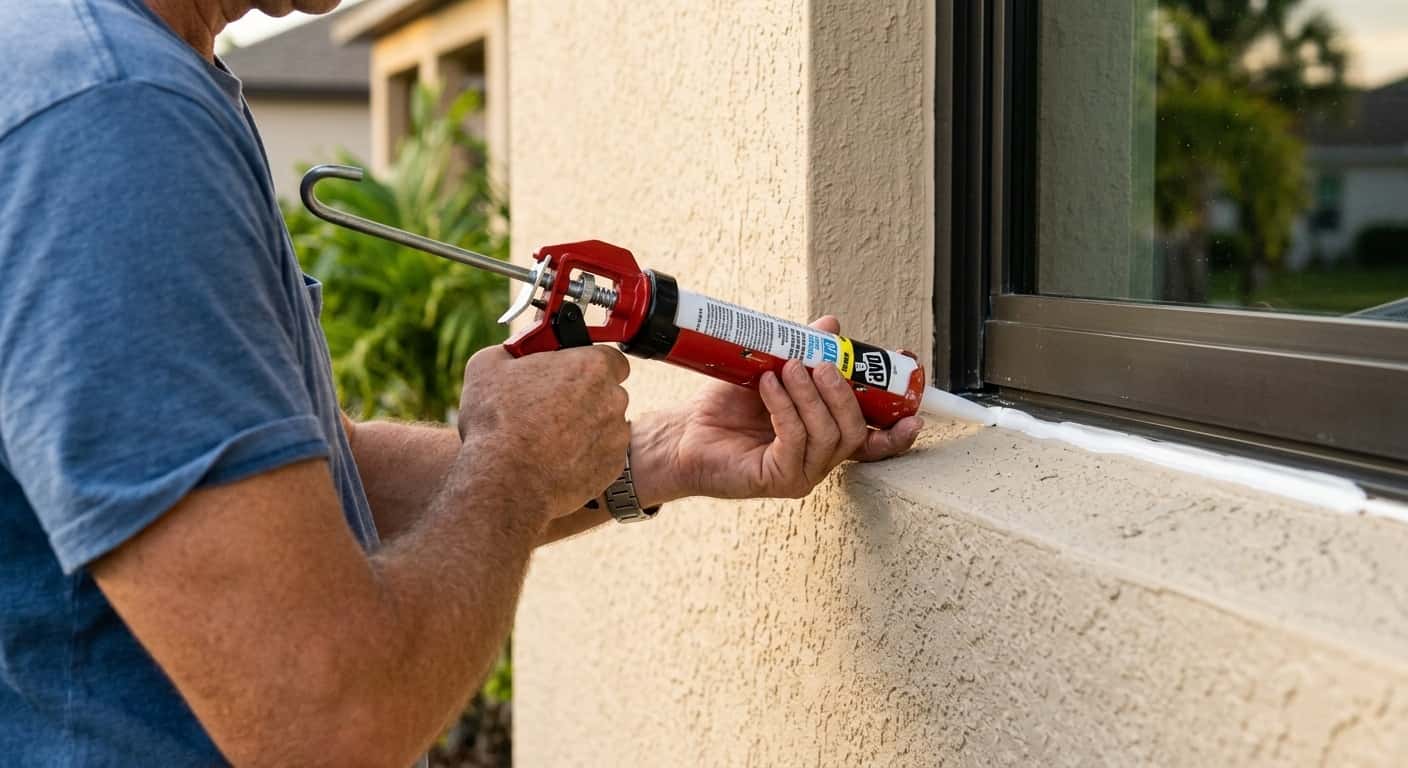
What actually matters between visits: cut the limbs back off the roof. When you seal a gap, pack steel wool in first and caulk over it, because foam alone is something a rat chews back out. Attics in long occupied homes also fill with paper and cardboard that hold humidity, and that is where silverfish set up. Our roof rat guide covers the attic warning signs.
The Boom Decade Subdivision: The Maintenance Window Opens
A typical Brandon home dates to the 1990s. Westchase built out across more than thirty villages, and Tampa Palms, Hunter’s Green, and West Meadows filled in New Tampa against the preserve line. These houses are old enough to have a history and young enough that owners still think of them as new.
The characteristic failure is the first maintenance cycle. Screen splines loosen, door sweeps flatten, and caulk lines that were fine for twenty years stop being fine. Summer storms speed all of it up, which makes the end of the wet season the time to walk a pool cage or lanai and look at the screen. Nothing here is dramatic, which is why it gets missed. The house has not changed enough for anyone to notice, and then something is in the attic.
The characteristic pest depends on what the subdivision was built around, and in this era it was almost always water. Retention and golf ponds are standard equipment, and ponds that collect organic material are documented breeding habitat for the southern house mosquito. That gives a pond backed lot its own mosquito population thirty yards from the porch all wet season.
Shade decides the rest. Adult mosquitoes spend the day in dense humid foliage rather than the open, so a lot under full canopy holds more of them than an open lot two streets over with identical breeding pressure. That is where mosquito control works, alongside source elimination on your own lot, since a bottle cap of water is enough for some species to complete a generation. The county’s public program works the large breeding grounds, and it keeps sentinel chicken flocks tested for the encephalitis viruses mosquitoes carry, so an outbreak shows up in birds before people. None of that reaches the saucer behind your lanai. Our mosquito guide covers the season.
Subdivisions built against conservation land add wildlife, and New Tampa preserve edge lots see a fall surge into attics that interior lots skip. Sealing the roofline before the cool nights is the cheap version. The January attic cleanup is the expensive one.
The New Build: No Failures Yet, Pests Anyway
Riverview’s housing stock is overwhelmingly this century’s, and almost nothing there predates 1970. Panther Trace, Triple Creek, and the cul de sacs still being platted are the newest ground we work.
The characteristic failure is that there is not one. A house built in 2022 has intact seals, modern soffits, code compliant screens, and a slab with no crawl space to exploit. Structurally it is the hardest era in the county to get into. Homeowners read that as permission to postpone pest control, which is the one wrong conclusion available.
The characteristic pest is whatever the construction itself brought. A new lawn is open, sunny ground, precisely the habitat fire ants prefer. They also travel in nursery stock and sod, so a colony can arrive with the turf, and newly mated queens fly in from a mile away regardless. A mound in grass three months old means the colony found what it wanted. Our fire ant guide explains why the mound you see is the smallest part of the problem, and ant control here means treating colonies while the landscape is still settling.
Overhead, young eaves make the same offer to paper wasps and mud daubers that forty year old eaves do. Florida rarely delivers the hard freeze that ends a colony up north, so mated queens ride out winter in bark crevices and build the moment it warms. Check eaves, shutters, and the grill cover in March, when a comb is golf ball sized with no workforce to defend it. Wasp control is far simpler in spring than September.
The third factor is the lot next door. Active construction keeps the ground in motion, and displaced rodents probe fresh soffits for somewhere the clearing did not reach. That ends when the building does, though it never feels temporary at the time.
The Geography That Ignores Your Build Year
Two things override the era rules.
Canopy. The northwest suburbs are oak canopy country: Lutz, Carrollwood, Citrus Park, Westchase, and Town ‘n’ Country. Homes here span five decades and each fails in its own way, but a mature oak bridging roof to roof serves a rodent identically no matter when the roof was framed. If a limb touches your house, your build decade is the second most important fact about your property.
Permanent water. The Hillsborough River threads the county from Thonotosassa down to the bay, and Lake Thonotosassa is the county’s largest natural lake. Temple Terrace has the river wrapping much of its residential land. Neighborhoods on that water get old landscaping and moisture that never leaves, which is three problems layered on one lot. Larvae in the shallows. Rats sheltering in the limbs above. Ant colonies in soil that stays wet enough to keep producing through the dry months. Farther south, Ruskin and Apollo Beach add coastal humidity, and east, farmland edges around Plant City send field rodents to test houses every fall.
How to Use Your Build Decade
Look up your year built, then work through this in order.
- Find your era above. If your house is a 1978 ranch with a 2004 addition, both sets of rules apply to their own halves.
- Check your era’s failure first. Crawl space vents and floor drains on an older house. Accumulated penetrations on a ranch. Screen splines and soffit seals on a boom decade home. Sod, eaves, and the lot next door on a new build.
- Then walk the perimeter and look up. A limb resting on the roof outranks everything else no matter what era you landed in. Do the sealing in autumn, when the rats that spent the warm months feeding in the yard start looking for somewhere indoors.
- Know which signs mean stop. Droppings, gnaw marks, or runway smudges along rafters are a rodent confirmation, not a maybe. Our guide on when to call an exterminator covers the rest.
None of this replaces treatment. It tells you where the pressure comes from, which is the difference between killing tonight’s roach and closing the door it used.
One Company, Every Era
Whether the address is a bungalow off Nebraska Avenue or a four year old house in Panther Trace, the arrangement is the same. A short list of technicians who get to know your house, so the crawl space vent or the recurring soffit gap is not something anyone finds twice. We have treated the full range of Hillsborough housing since 2007 and service the entire county from our family office in Odessa, from Tampa and the northwest suburbs through Brandon, Riverview, and south county. One boundary up front: termites are a specialist’s trade, and if an inspection turns up evidence we refer you out.
To learn what your build decade means for your address, see pest control across Hillsborough County, call 813-961-2627, or request a free quote.