
Here’s something a pest control company probably shouldn’t admit: a lot of DIY pest control works, and works well. Sanitation, exclusion, and moisture control done by a homeowner prevent more infestations than any product ever applied. The danger isn’t in doing pest control yourself. It’s in doing the wrong half yourself, which is where sprayed ant trails split into several colonies, foggers push German cockroaches into rooms that were clean, and a kicked fire ant mound sends someone to urgent care. This guide separates the two halves.
Key Takeaways
- DIY prevention (sanitation, exclusion, moisture control) genuinely works and is worth every hour you spend on it
- DIY treatment backfires most often through misidentification, repellent sprays that fragment ant colonies, and foggers that scatter roaches
- Fire ant mounds and wasp nests are the two DIY attempts that most often end in stings and urgent care visits
- Professionals differ in what happens before application: species identification, source location, and placement, all backed by state licensing
Which DIY Pest Control Methods Actually Work?
The unglamorous work is the effective work. Pests need food, water, and a way in. Homeowners control all three.
Sanitation
Store pet food in sealed containers and pick up bowls overnight. Wipe grease from the sides of the stove, where roaches feed on residue you can’t see from above. Take garbage out nightly during Tampa Bay’s summer months, when heat accelerates the odors that pull in flies, roaches, and ants. Break down cardboard boxes quickly. None of this is exciting, and all of it lowers the carrying capacity of your home, meaning any pests that do get in find less reason to stay.
Exclusion
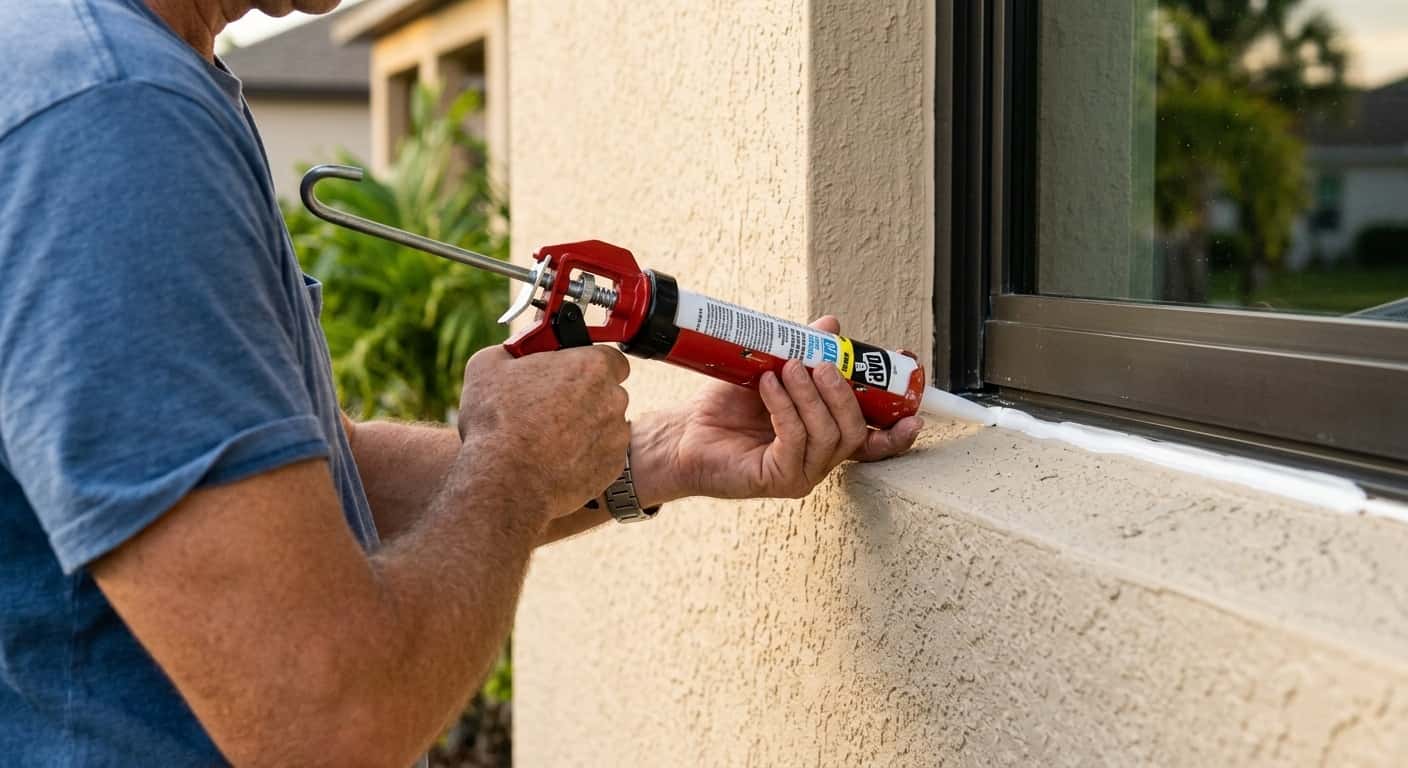
Walk your home’s exterior twice a year with a caulk gun. Seal gaps around pipe and cable penetrations, repair torn window screens, add door sweeps where daylight shows under exterior doors, and check that weep holes and vents are screened. Exclusion is the same principle behind professional rodent work: if pests can’t get in, nothing needs to be treated. A tube of sealant applied in March prevents problems no spray can fix in July.
Moisture Control
Florida pests are moisture driven more than food driven. Fix dripping hose bibbs, redirect AC condensation lines away from the foundation, clean gutters before June, and pull mulch back a few inches from the slab. Palmetto bugs, silverfish, and ants all track moisture gradients straight to the wet spots around a home. Our guide on how weather changes affect pest activity in Florida explains why the June through September rain pattern makes this the highest value DIY work of the year.
Where Does DIY Treatment Backfire?
Treatment is where the failure stories come from, and they tend to repeat. These are the six patterns we’re called out to fix most often.
Spraying Kills the Trail, Not the Colony, and Can Split It
The ants on your counter are foragers, a small fraction of the colony. A repellent spray kills them on contact and leaves a barrier the rest of the colony detects and avoids. With ghost ants and other multi queen Florida species, that stress can trigger budding: the colony fragments, queens disperse, and one nest becomes several behind different walls. Spraying also contaminates baits. If any bait placements are down, a spray applied nearby can make ants avoid the one tool that would have reached the queen. This is the single most common way Tampa Bay homeowners turn a one week ant problem into a three month one.
Foggers Scatter Roaches Instead of Reaching Them
Total release foggers deposit mist on open surfaces, which German cockroaches avoid, and fail to penetrate the cracks, wall voids, and appliance housings where they actually live. The survivors relocate, often into rooms or adjacent units that were clean. The CDC has documented illnesses and injuries from total release fogger misuse, including fires from propellant igniting near pilot lights. Effective cockroach control is crack and crevice work, which is nearly the opposite of filling a room with mist.
Misidentification Leads to the Wrong Treatment Entirely
Treating the wrong species means weeks of wasted effort. Winged ants get mistaken for termite swarmers and vice versa, and the two problems have completely different answers. We don’t treat termites at Liberty Pest Management, and we’ll refer you to a termite specialist if that’s what the identification shows, which is exactly the point: identification determines everything that follows. The same trap catches homeowners baiting for the wrong ant species with the wrong bait formulation, or treating for fleas when the bites are actually from bird mites. Professionals identify first because every treatment decision depends on it.
Fire Ant Mounds Punish Improvisation
Disturbing a red imported fire ant mound, whether by kicking it, flooding it with a home remedy, or mowing over it, triggers a mass defensive response within seconds, and each ant stings repeatedly. For the small share of people with venom allergies, those stings can cause a severe reaction. UF/IFAS entomologists note that pouring home remedies on a mound rarely kills the queen; the colony simply relocates a few feet away and rebuilds. If fire ants are claiming your yard, read our guide to getting rid of fire ants in a Florida yard before touching a mound.
Wasp Nests Are Not a Ladder Job
Paper wasps defend their nest as a group, and the worst DIY injuries we hear about combine a startled homeowner, a ladder, and a nest under an eave. Spraying a nest in daylight, when workers are active, invites multiple stings and a fall. Small, newly started nests early in spring are one thing. An established nest at height, near an entry door, or inside a wall void is professional wasp and hornet work, with the right protective equipment and no ladder panic.
Over Application Around Kids, Pets, and Waterways
The most common DIY instinct, if some works, more works better, is wrong and unlawful. The EPA treats every pesticide label as a legally binding document: applying more than the label allows, or in places it prohibits, violates federal law. Over application is how residues end up on floors where toddlers crawl and in gardens where pets graze. It’s also a watershed issue. In Tampa and across the bay area, storm drains carry runoff toward the bay, so product sprayed on driveways and swales before an afternoon storm doesn’t stay where you put it.
DIY or Professional? A Quick Reference
| Task | Verdict | Why |
|---|---|---|
| Sanitation and food storage | DIY | Nobody controls your kitchen better than you |
| Sealing gaps, screens, door sweeps | DIY | Highest value prevention work there is |
| Moisture and gutter maintenance | DIY | Removes the driver behind most Florida pest pressure |
| Baiting a light ant trail | DIY with patience | Works if species and bait match; never spray near baits |
| German cockroach infestation | Professional | Requires crack and crevice treatment and follow up |
| Fire ant mounds | Professional | Broadcast strategy beats mound by mound whack a mole |
| Established wasp nest | Professional | Group defense plus ladders is how people get hurt |
| Rodents in the attic | Professional | Trapping without full exclusion fails every time |
What Do Professionals Actually Do Differently?
Not stronger chemicals. Professionals usually apply less product than a frustrated homeowner does, in smarter places. The differences that matter:
Identification before treatment. Species determines everything: bait choice, placement, timing, and whether treatment is even the right tool. A technician who identifies ghost ants versus big headed ants in the first five minutes has already prevented the most common DIY failure.
Targeted placement. Professional work happens in cracks, voids, and along the trails and harborages pests actually use, not broadcast across open surfaces where it accomplishes nothing and creates exposure.
Licensing and accountability. Florida licenses pest control operators through the Department of Agriculture, with training requirements behind the license. Liberty Pest Management operates under FL license JB-151032, which means our applications are accountable to state law, not just to a product label skimmed in a garage.
Paying for results, not attempts. A homeowner buying spray after spray is paying per attempt, with no one accountable for whether the problem actually ends. Professional service is built around finding and treating the source, and a recurring plan gets judged on whether the problem stays solved.
Frequently Asked Questions
Is DIY pest control ever enough on its own in Florida?
Yes, for prevention and for light, correctly identified problems. A home with sealed entry points, controlled moisture, and good sanitation may never need more than occasional spot treatment. Where DIY stops being enough is established infestations, hidden nests, and any species where wrong treatment makes things worse, like German cockroaches and multi queen ants.
Why did my roach problem get worse after a bug bomb?
Because foggers scatter roaches rather than reach them. The mist settles on open surfaces while the population sits protected in cracks and appliance voids, and survivors disperse into new areas of the home. Many homeowners see roaches in rooms that never had them within a week or two of fogging.
Are professional treatments safe around kids and pets?
Professional treatment is placement driven: products go into cracks, voids, and stations that children and pets can’t reach, following label directions that carry the force of law. Your technician will tell you if any re-entry time applies to a specific application. That placement discipline is exactly what over the counter broadcast spraying lacks.
What should I keep doing myself after hiring a pro?
All of the prevention work: sanitation, exclusion, and moisture control. Professional treatment knocks down the population and intercepts what comes from outside, but a technician visits periodically while you live there every day. Homes where the homeowner handles prevention and the professional handles treatment tend to see the fewest repeat problems.
The Honest Bottom Line
Do the prevention yourself, and take pride in it. Skip the fogger, leave the fire ant mound and the wasp nest alone, and get an identification before you treat anything you can’t name. If a problem has survived two of your attempts, a third attempt usually costs more than an inspection would. Get a free quote with Liberty Pest Management, family owned and serving Tampa Bay from our Odessa office since 2007.