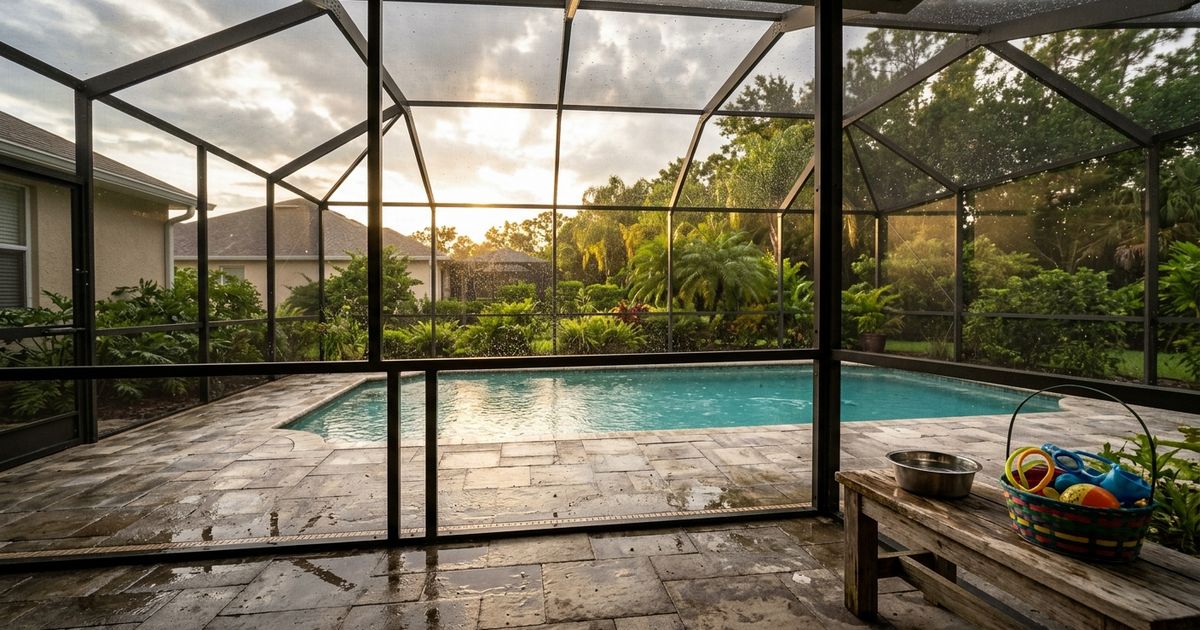
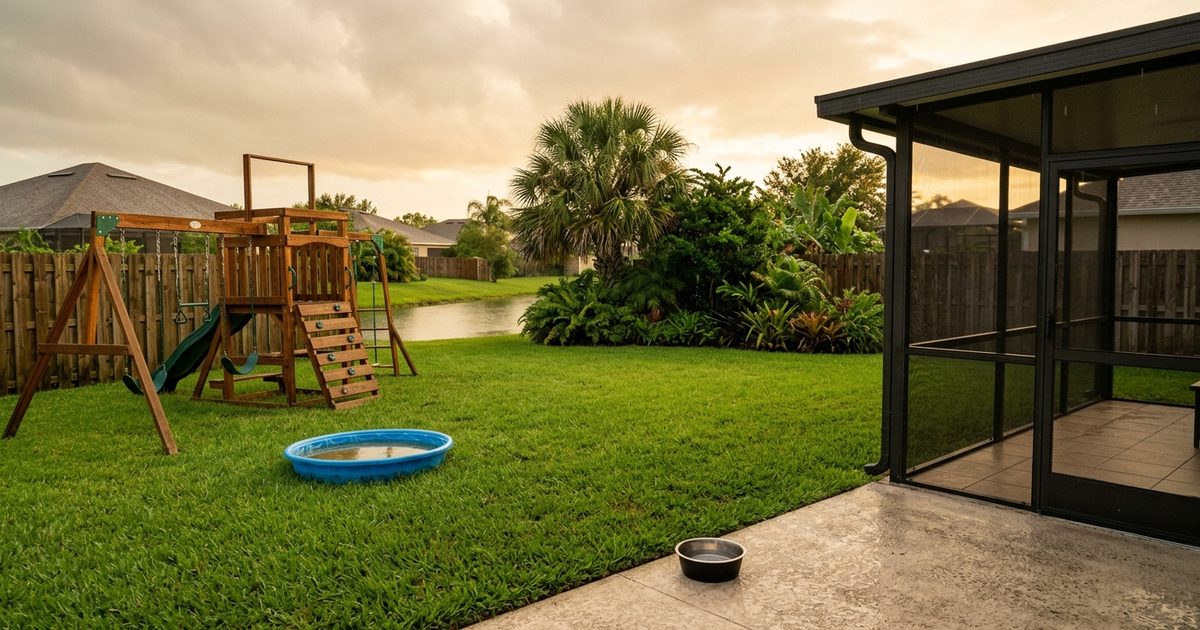
The backyard empties out at dusk.
Pet friendly mosquito control in Tampa Bay comes down to two moves. Take away the water mosquitoes breed in, and put treatment in the shaded shrubs where mosquitoes wait between bites. Liberty works that way, with environmentally friendly products chosen with children and pets in mind and applied to shaded foliage, not to the open blooms where pollinators feed.
You know the evening. The swing set still holds the heat of the day, the dog is stretched out on the cool pavers, and by the time the streetlights come on everyone is slapping at ankles and retreating to the screened lanai. You want the mosquitoes gone. You also want to know what goes on the grass before anyone sprays a thing, because that grass is where your kids play and your dog rolls. Both instincts are right.
Key Takeaways
- Aedes mosquitoes, which spread dengue, lay eggs on the inner walls of containers that hold water, and the CDC says those eggs can survive drying out for up to 8 months.
- Mosquito bites spread dengue, Zika, and West Nile virus. The CDC says Zika infection during pregnancy can cause serious birth defects.
- Heartworm reaches dogs and cats through mosquito bites, and the FDA says year round prevention is best. Your veterinarian chooses it.
- No pesticide is risk free. What changes the risk is the product, where it goes, and whether the label is followed.
- Liberty inspects for standing water and shows you what to fix, treats the shaded vegetation where adult mosquitoes rest, and uses EPA registered products chosen with children and pets in mind, applied according to the label.
Every Storm Refills the Breeding Spots
Look around the yard the morning after an afternoon storm. The kiddie pool has an inch of rain in it. The dog’s outdoor bowl is topped off with warm water. A toy dump truck lies upside down in the grass, its bed full. Bromeliads by the front walk hold a little pool in the center of every plant.
Each one is a place to lay eggs. According to the CDC, Aedes mosquitoes lay eggs on the inner walls of containers with water, just above the waterline, and those eggs can survive drying out for up to 8 months. So tipping a bucket over is half the job. The eggs stuck to the wall wait for the next rain, which in a Tampa Bay summer is rarely far off.
The bromeliads surprise people. UF/IFAS researchers note that rain or irrigation collects in the central tank and leaf bases of these plants, and that Aedes aegypti and Aedes albopictus, two invasive container mosquitoes, can develop there.
Then there is the water nobody can dump, such as the retention pond behind the subdivision, a neighbor’s neglected pool, the ditch along the road. You do not control those. You do control what happens in your own yard, and that turns out to be quite a lot.
What the Bites Carry
A few bites carry viruses, and parents deserve the plain version.
Dengue. The CDC says dengue viruses spread mainly through the bite of an infected Aedes mosquito. The most common symptom is fever with aches and pains, and symptoms range from mild to severe. There is no specific medicine to treat it.
Zika. Zika spreads to people through the bites of infected mosquitoes. Many people infected never have symptoms, or have only mild ones. The concern is pregnancy. The CDC says infection during pregnancy can cause serious birth defects. If someone in the house is expecting, bring the mosquito question to the OB.
West Nile virus. The CDC calls it the leading cause of mosquito borne disease in the contiguous United States. Most people infected never develop symptoms, and a smaller number become seriously ill. It spreads most commonly through the bite of an infected mosquito.
Questions about symptoms belong with your pediatrician or family doctor. Fewer mosquitoes in the yard means fewer bites on the people who live there.
The Dog Has a Mosquito Problem Too
Heartworm is the one most dog owners have heard of and few connect to the backyard. The FDA states it directly. The worms are spread through the bite of a mosquito. Dogs, cats, and ferrets can all be infected. Left untreated, the disease is serious and can eventually cause death.
Location raises the stakes here. The FDA notes that heartworm disease in dogs is most common along the Atlantic and Gulf coasts, and Tampa Bay sits on the Gulf.
Cats get a harder deal. There is no FDA approved drug to treat heartworm disease in cats, although several products are approved to prevent it. For dogs and cats alike, the FDA’s advice is that year round prevention is best.
That prevention comes from your veterinarian, and no yard treatment replaces it. The yard work is aimed at the mosquitoes your dog meets lying on the patio every evening.
How Safe Is Mosquito Control for Pets and Kids?
The honest answer depends on the product, where it goes, and whether the label is followed. The National Pesticide Information Center puts it bluntly. Every pesticide is toxic if the exposure is high enough, so none is entirely safe. Risk is toxicity multiplied by exposure.
Children change the exposure side of that math. NPIC points out that kids spend more time close to the ground, touch lawns where pesticides may have been applied, and put fingers and toys in their mouths. A dog does all of that and adds a nose pushed deep into the hedge. So the worry about spraying where they play is reasonable, and nobody should wave it off.
The store aisle offers its own answers, and most of them do not hold up. A UF/IFAS Extension agent summarizing the research put citronella candles, smartphone apps, and plug-in ultrasonic devices on the list of things that have not been shown effective in studies. Bracelets, bands, and patches do not provide good protection either. A gadget that does not work brings no relief.
Family friendly mosquito control lowers risk through placement and judgment. That is why Liberty chooses products with children and pets in mind and puts them in the shaded foliage where mosquitoes rest.
What Pet Friendly Mosquito Control Looks Like
A plan that suits a yard with kids and a dog has a few clear features, starting with the water and ending with a straight answer about whether a treated area needs time to dry. Liberty’s mosquito service is built on each of them.
It starts with water. Emptying a kiddie pool puts nothing on the lawn at all. Removing breeding sites is the part of mosquito control with no exposure attached, and a good plan treats it as the first step.
Treatment follows the mosquitoes. A plan built for your property names the shaded spots where adults wait between bites and treats them, and it keeps treatment off the open blooms where pollinators feed.
The label governs. Every registered pesticide carries one, and the EPA’s own summary is that the label is the law. A product used against its label is a violation of federal law.
Someone tells you if it needs to dry. The EPA advises keeping children and pets out of treated areas until a spray has dried. You should hear which areas need that from the person who treated them.
How Liberty Treats a Yard Where Kids and Dogs Play
Every Liberty mosquito control service begins with an inspection. Your technician walks the yard looking for standing water and breeding sites, the kind of spots described above, and shows you exactly what to fix. That puts the no exposure half of mosquito control in your hands.
Treatment goes to the shaded vegetation where adult mosquitoes wait between bites. Think of the dense hedge along the lanai screen or the shrubs on the shady side of the house. The open blooms where pollinators feed are left out of it. Material goes where the mosquitoes are, and the plan is built around your yard.
The products are chosen with children and pets in mind. Everything Liberty applies is EPA registered and applied according to its label, so the instructions printed on that label govern the work. Our FAQ answers the children and pets question directly, and our post on the method behind our approach covers the reasoning in more depth.
Mosquito service is entirely outdoors. No one needs to be home, so nobody takes an afternoon off work, and the visit stays outside the house.
Before your technician leaves, they tell you if a treated area needs time to dry before kids or pets use it. Our post on when kids and pets can go back in explains how to read that instruction and what to ask.
The same shaded fence line can hold more than mosquitoes. If ticks or fleas are part of the picture, say so at the inspection, and tick control or flea control can be built into a plan made for that home. Our post on pest control for pet owners covers the rest of the pet household.
Liberty Pest Management is family owned, based in Odessa, and has served Tampa Bay since 2007 under Florida license JB-151032. We work across Hillsborough, Pasco, and Pinellas counties, from Odessa to Tampa.
Habits That Keep the Next Batch From Hatching
Treatment works on the adults. The household works on the eggs, and the CDC’s routine is short enough to stick to. Once a week, empty and scrub, turn over, cover, or throw out anything that holds water. In a family yard that list usually looks like this.
- The kiddie pool and the toys around it. Scrub the walls, since eggs cling there above the waterline.
- The dog’s outdoor bowl. UF/IFAS mosquito researchers advise changing the water in pet dishes frequently.
- Bromeliads. UF/IFAS recommends flushing the plant centers with a strong jet from the hose at least once a week.
- Flowerpot saucers, buckets, birdbaths, and trash containers.
- Gutters. Keep them clean so they drain.
Seal the house, too. The CDC recommends screens on windows and doors, with holes repaired, and air conditioning when you have it.
For the people, the CDC recommends EPA registered insect repellent used according to its label. Its guidance for children is specific. An adult applies repellent to their own hands and then to the child’s face, and never to a child’s hands, eyes, mouth, cuts, or irritated skin. Products with oil of lemon eucalyptus or PMD are not for children under 3. For a baby or toddler, ask your pediatrician before using anything. Ask your veterinarian before putting any repellent on a pet.
For the full season timeline and species, see our Tampa Bay mosquito season guide. After a tropical storm the water list grows long, and our post on hurricane season pest problems covers that cleanup.
If dusk has turned into the hour your family stays inside, ask us for a free quote. Tell us about the kids, the dog, and the swing set, and we will walk the yard, show you what to fix, and treat where the mosquitoes rest.
Liberty Pest Management serves the Tampa Bay area including Pasco, Hillsborough, and Pinellas counties, from Odessa and Land O’ Lakes to Tampa, Brandon, and Clearwater. Licensed by the Florida Department of Agriculture (JB-151032). Call us at 813-961-2627 or get a free quote today.