In a single year, checked against the Florida Poison Control Network’s records, 182 brown recluse bites were reported across the state. Ninety six of those reports came from the twenty one counties served by the Tampa regional center.
Not one brown recluse spider has ever been collected in Tampa.
That gap between what people believe they were bitten by and what actually lives here is the most useful thing to understand about spiders in a Florida home. It changes what you should worry about, what you should do about a wound, and what a spider problem in your house is actually telling you.
Key Takeaways
- The only spiders established in Florida with medically significant venom are the widow spiders. UF/IFAS states this plainly.
- There is no scientific evidence that any recluse spider is established in Florida, and verified records exist in only 8 of the state’s 67 counties.
- The brown widow is now common statewide and is identified by an orange to yellow hourglass and a spiky, tufted egg sac.
- Most widow bites stay minor. Of reported cases nationally, about 65% produce minor effects and roughly 1.4% are major.
- Spiders indoors are a symptom. They follow the insects, which means a spider problem is usually an insect problem you have not found yet.
Is the Brown Recluse Established in Florida?
No. This is the rare pest question with a flat answer from the state’s own arachnologist.
The Florida Department of Agriculture published a survey by the curator of arachnids at the Florida State Collection of Arthropods examining exactly this. Verified records of recluse spiders exist in only 8 of Florida’s 67 counties: Alachua, Bay, Dade, Duval, Jefferson, Leon, Orange, and Osceola. In the Tampa Bay region, the only records anywhere nearby are from Orlando and its vicinity.
The curator personally identified several hundred spiders submitted by the public and examined thousands more submitted by professional biologists and inspectors. One was a brown recluse. His conclusion was that the chance of interaction between brown recluse spiders and people in Florida is close to nil, and that there is no evidence supporting either a widespread Florida population or repeated introductions into the state.
Where recluses have turned up in Florida, in a handful of individual buildings, the infestations were traced to materials moved in from other states, stayed confined to those buildings, and were eliminated.
Why So Many People Are Told They Have One
Two harmless Florida spiders get mistaken for recluses constantly. The southern house spider, whose males are long legged and brown, builds messy webs in window eaves across the state. The huntsman spider, also called the giant crab spider, is a large flat brown spider that lives in houses, builds no web at all, and hides under furniture and behind wall hangings.
The bigger issue is medical. A necrotic wound has many possible causes, and spider bite is one of the least likely in Florida. Documented alternatives include bacterial infections such as staph and strep, herpes and shingles, diabetic ulcers, fungal infections, vasculitis, chemical burns, poison ivy, tickborne illness including Rocky Mountain spotted fever, and drug reactions. The guidance from the entomological literature is direct: if there is an inflammatory core lesion, necrotizing infection should be anticipated rather than a spider bite.
If you have a wound you are worried about, the useful move is to see a doctor about the wound, not to search your house for a spider that does not live here.
Which Spiders in Florida Actually Have Dangerous Venom?
UF/IFAS states it directly: the only spiders native to or established in Florida with medically significant venom are the widow spiders. There are four in the state, and they are not equally relevant to your house.
Southern Black Widow
Shiny black, with the red hourglass on the underside of the abdomen. Males are much smaller and lack the hourglass. The web is the giveaway as much as the spider: irregular and tangled, built without any recognizable pattern, unlike the neat wheel of an orbweaver.
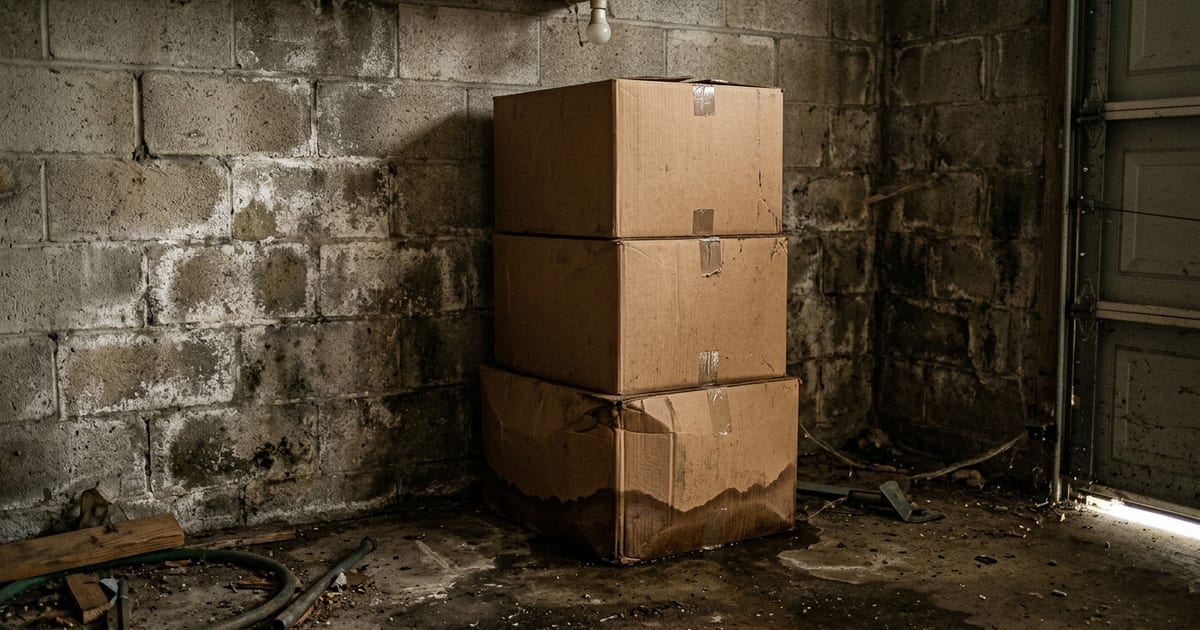
They favor exactly the places you reach into without looking. Garages, sheds, outbuildings, and stored boxes. Bites frequently happen when someone puts on a shoe that has been sitting in a garage, or reaches into a box that has not been opened in a season. The venom contains a neurotoxin, which is why this spider gets treated seriously.
Brown Widow
Now common throughout Florida, and the widow most Tampa Bay homeowners will actually encounter. Color ranges from light tan to dark brown, which makes color a poor identifier. Two things are reliable.
First, the hourglass is orange to yellow rather than red. Second, and more useful, the egg sac is unmistakable: it is covered in pointed projections, like a small globe with spikes. A smooth egg sac is not a brown widow. A spiky one is, and finding one tells you more than finding the spider.
Brown widows hide in recessed, sheltered, human made spaces at low height. The undersides of patio chairs, plant pots, empty buckets, mailboxes, entryway corners, eaves, old tires, the recessed hand grips of plastic garbage cans, and the undercarriages of cars that sit for long stretches.
On venom, two facts have to travel together. Drop for drop the venom is potent, comparable to other widows. But brown widows are smaller, deliver far less of it, are extremely timid, and do not defend their webs. In a study of verified brown widow bites, victims showed none of the classic systemic symptoms associated with black widow envenomation. The main effects were pain and redness at the bite site, not much different from an ordinary house spider bite. The “twice as potent” line that circulates online is technically traceable to venom toxicity measures and badly misleading without the rest of it.
Northern Black Widow and Red Widow
The northern black widow is present in Florida and resembles its southern relative, with black legs rather than the brownish banded legs of a brown widow.
The red widow deserves a correction, because nearly every list of “Florida’s dangerous spiders” includes it as though it were a household concern. It is not. The red widow is a Florida scrub endemic, living from the Ocala National Forest south to Palm Beach County with an isolated population near Cedar Key. It builds its web almost exclusively by rolling a saw palmetto or scrub palmetto frond into a cone, usually within four feet of the ground. It has a reddish orange cephalothorax and legs, and its underside carries one or two spots rather than a full hourglass. It is a species of conservation concern in protected scrub habitat. You are not going to meet one in a Wesley Chapel garage.
How Serious Is a Widow Bite, Really?
A widow bite deserves medical attention. It almost never deserves panic, and the national numbers show why.
Nationally, about 2,600 widow spider exposures are reported to poison control each year. Among those with symptoms, roughly 65% produce minor clinical effects, about 33.5% moderate, and about 1.4% major or life threatening. The most common effects are skin irritation, redness, localized pain, swelling, and abdominal pain. Recovery is usually complete within 24 to 48 hours.
Deaths are rarely reported. In one year with 2,168 self reported black widow bites nationally, 892 of which were treated in a healthcare facility, there were no deaths.
Widows are shy and non aggressive. Bites rarely happen unless the spider is pinched against skin, trapped in clothing, or otherwise pressed. That is the practical takeaway: the risk is not a spider crossing a room, it is a spider you did not see when you reached somewhere dark.
If someone is bitten and develops muscle cramping, abdominal rigidity, sweating, chest pain, or difficulty breathing, that is a call to a doctor or poison control, not a wait and see.
The Florida Spiders That Are Doing You a Favor
Most spiders in a Tampa Bay home are harmless, and several are actively useful.
Golden silk orbweaver, the one everyone calls a banana spider. Among the largest non tarantula spiders in North America, with females reaching 24 to 40 mm and building webs one to two meters across. It bites only if held or pinched, and the result is localized pain and slight redness that fades quickly, less severe than a bee sting. Females mature in August and persist into late fall, which is when people walk into the webs.
Spiny orbweaver, the small white crab shaped spider with six abdominal spines and red markings, common on shrubs and trees around houses. Adults occur year round but peak from October through January. Its bite is not known to cause serious effects.
Regal jumping spider, the largest jumping spider in eastern North America and the one most often encountered in Florida. Bites require the spider to be held tightly, sting briefly, and need no treatment.
Huntsman spider, the large flat brown spider that startles people in garages and behind picture frames. It builds no web, hunts on foot, and eats cockroaches and other household insects. UF/IFAS is blunt that it is not dangerous, and notes it is sometimes mistaken for a large brown recluse despite being neither related nor harmful.
Cellar spiders and southern house spiders, the long legged residents of corners, eaves, sheds, and attics. Harmless.
Why Spiders Are a Symptom, Not the Problem
Here is the part that changes how you should think about spider control.
Spiders are predators. They build where prey concentrates, and they stay where hunting is good. A huntsman spider living in your garage is there because the garage has cockroaches. An orbweaver strung across the porch light is there because the light gathers night flying insects. Research on widow spiders found that individuals with limited food build webs that capture prey at a higher rate than those with abundant food, which is another way of saying spider effort tracks insect supply.
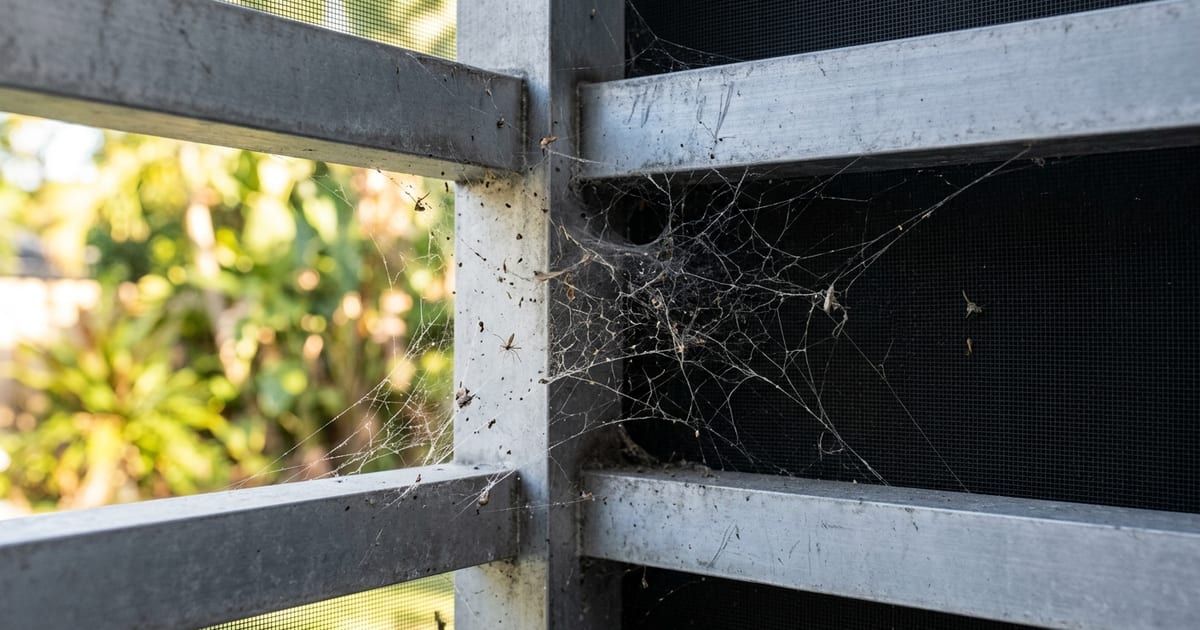
The mechanism with exterior lighting is worth understanding, because it is the most common one around a Florida house. Spiders are not attracted to light. Their prey is. Orbweavers use eaves as web anchors and position webs to intercept the insects that lights concentrate, then retreat into a small silk shelter under the eave during the day.
So a house with a persistent spider problem is usually a house with an insect problem that has not been identified. Treating the spiders directly, without touching the food supply, gets you a temporary reduction and a repeat visit.
What Actually Reduces Spiders Around a Tampa Bay Home
Reduce the insects first. This is the whole ballgame. A maintained exterior barrier that keeps the general insect population down removes the reason spiders are there. That is what recurring pest service is actually buying you, and our guide on when to call an exterminator covers where the line sits.
Change what your exterior lights attract. Yellow bulbs or sodium vapor fixtures at entrances draw far fewer night flying insects than conventional bulbs. Fewer insects at the door means fewer webs at the door.
Remove webs mechanically and repeatedly. Knocking down webs and vacuuming removes spiders, egg sacs, and the trapped prey that signals good hunting. It has to be a habit rather than an event.
Close the entries. Seal cracks and gaps around the foundation, doors, and ground level windows, the same work that keeps everything else out.
Clear the harborage. Stored boxes in garages, stacked materials against the house, and undisturbed clutter are where widows actually live. Shake out shoes and gloves that have been sitting. Wear gloves when moving long stored items.
When Does Spider Season Start in Florida?
It does not really stop, which is a more accurate answer than the seasonal one you will usually read.
What changes is visibility. Orbweavers stay inconspicuous until late August, then adult females grow large, build large webs, and become noticeable, in some species sitting in the hub of the web during daylight in fall rather than hiding. That is why fall feels like spider season. The spiders were there in June; they were smaller and their webs were smaller.
Meanwhile the spiny orbweaver actually peaks from October through January, red widow adults are found year round, and widow exposures nationally rise through spring, summer, and autumn. In a climate without a hard freeze, spider activity is a year round baseline with a fall peak in size and conspicuousness.
What This Means for Your House
If you are seeing spiders indoors regularly, the questions worth asking are what they are eating and where they are getting in, not which venom to fear. In almost every Tampa Bay home, the answer to the first question is the insects that a maintained exterior barrier would have handled.
If you are finding widow spiders, particularly in a garage, shed, or patio furniture, that is worth addressing directly and worth being careful around while you do. Spiky egg sacs mean brown widows are breeding on the property, and removing sacs matters as much as removing spiders.
And if someone tells you a wound is a brown recluse bite, remember the number at the top of this page. In the Tampa region, the poison center logged 96 reported recluse bites in a single year, and the collection record for the city stands at zero.
Liberty Pest Management is family owned, based in Odessa, and has served Tampa Bay since 2007 under Florida license JB-151032. If spiders keep coming back, ask us for a free quote and we will look at what they are eating.
Liberty Pest Management serves the Tampa Bay area including Pasco, Hillsborough, and Pinellas counties, from Odessa and Land O’ Lakes to Tampa, Brandon, and Clearwater. Licensed by the Florida Department of Agriculture (JB-151032). Call us at 813-961-2627 or get a free quote today.