
Bayonet Point holds 26,713 people on 5.73 square miles of west Pasco, twenty six feet above sea level and a short drive from the Gulf. What makes it unusual as a pest control problem is not the coast and not the soil. It is the arithmetic inside the front doors. There are 13,286 housing units here spread across 11,825 households, and roughly one household in three is a single person. Line that up beside the housing stock and you get the fact this whole page is built on: a great many Bayonet Point homes are larger than the number of people using them.
That is not a complaint about anything. It is a floor plan. And a floor plan decides where pests start.
Rooms Get Inspected by Being Used
Think about what actually happens in a house with four or five people in it. Somebody is in the garage every day. The second bathroom gets used every morning. The spare bedroom is where the sports gear lives, so it gets opened and dug through constantly. Nobody in that house is inspecting anything. They are just moving around, and the moving around does the inspecting for free.
Now take the same building and put one or two people in it. The daily route shrinks to a kitchen, one bathroom, one bedroom, a living room, and the path to the car. Everything outside that route goes untouched, not for a day, but for weeks at a stretch. The guest bath is clean because nobody is using it. The back bedroom is tidy because nothing happens in it. The garage gets crossed, not entered.
Every one of those rooms is now dark, still, undisturbed, and unobserved. Those are not four separate facts. They are the four conditions that decide where a pest population settles, and a quiet room supplies all four at once.
The reason this matters more here than in most places is simply that Bayonet Point has more of these households than most places. Median age is 50.1, about three in ten residents are 65 or older, and 20.7 percent of households are a person over 65 living alone. The pest logic is identical for a couple whose kids moved out, for someone who bought more house than they needed because the price was right, and for a thirty year old with a home office and a guest room that has held one guest. The room does not know who owns it. It only knows nobody opened the door.
The Drain That Stops Working When You Stop Using It
Start here, because it is the strongest single fact on this page and it costs nothing to act on.
Under every fixture in your house is a curved length of pipe that holds a small standing plug of water. That plug is the entire barrier between the room and the drain line beyond it. It is not a valve and there is nothing mechanical about it. It is water sitting in a bend, and water sitting in Florida evaporates.
A fixture in daily use refills its own trap every time it runs, so the barrier never has a chance to fail. A fixture nobody runs does not. Give a guest bathroom two months of nobody visiting and the toilet, the sink, and the tub all go dry on their own schedule, and each one becomes an open pipe with a tile floor on one end.
This matters because of where American cockroaches actually live. They are not household insects that decided to move in. They are outdoor animals whose address is the sewer and storm drain system running under the street, and they come up through the connections a building offers them. A dried trap is not a weak connection. It is a finished one. That is why a spare bathroom in an otherwise untroubled house can produce a large reddish brown roach on the floor at two in the morning with no explanation anywhere else in the building.
Refilling a trap takes about a cup of water and thirty seconds. Do it monthly at every fixture your week does not touch, and put the garage floor drain at the top of that list, along with the laundry sink and the spare tub. Our palmetto bug guide maps the rest of the entries. Sealed penetrations and treated exteriors are our end of the deal. This end is yours, and it holds.
Still Air Is a Habitat
A shut door does something else worth knowing about. It stops the air.
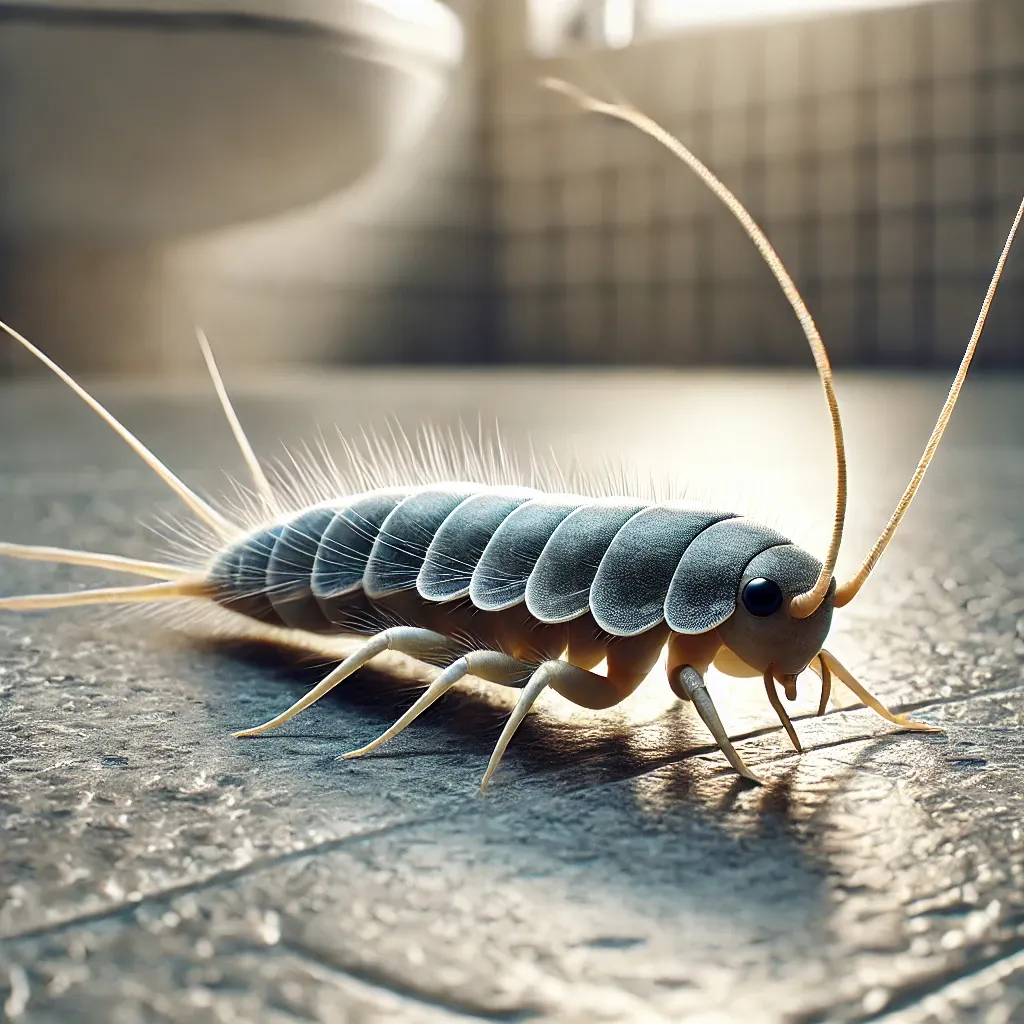
West Pasco humidity does not stay outside. It comes in with the weather and settles wherever nothing is stirring it, and a room with the door closed and the vent half shut becomes the dampest, stillest place in the building. Silverfish need exactly that: moisture plus dark cover. They are nocturnal and they shelter deep in cracks and boxes, so the first thing most people find is the damage rather than the insect. Irregular holes chewed along the edge of stored paper, faint yellowish staining, tiny translucent cast skins in the bottom of a drawer.
Then there is what accumulates in a room once it loses its daily job. Storage arrives. It always does, and it usually arrives in cardboard. Silverfish eat starch, which means a cardboard box is not a container holding their food. The box is the food, the board and the seam glue both, and the papers inside it are more of the same. A stack of cartons in a closed spare room is the meal and the harborage in one object.
None of this needs a product to fix. Open the door and let the room join the rest of the house. Run the vent. Get stored paper and fabric out of cardboard and into bins that seal, which removes the food and the hiding place in a single move. Our moisture guide walks through the rest of what dampness does to a Florida house, and the attic above a quiet wing usually deserves the same look.
The Real Problem Is Detection, Not Concealment
Here is the part that gets diagnosed backwards constantly.
When people find an established population in a spare room, the assumption is that it was hidden. Usually it was not hidden at all. Droppings along a baseboard, a rub mark on a garage stud, a shed skin on a windowsill, the specific dry rustle a rodent makes overhead at night: none of that is concealed. It is in plain view in a room where nobody has stood in six weeks.
That is a much better problem to have, because it has a free solution. The evidence is already there and already visible. It just needs a person in the room with the light on.
So the most useful advice we give in Bayonet Point is not a product recommendation. It is a walk, and it goes like this. Once a month, deliberately enter the rooms your routine skips. Run every tap and flush every toilet until the water runs clean and steady. Look where the floor meets the wall, because that is where droppings collect and where a baseboard gap shows. Open the closet and the cabinet under the sink and put a light in them. In the garage, look behind the stored boxes rather than at them, and check the bottom edge of the garage door for daylight, because a gap you can see through is a gap something can walk through. Listen to the attic hatch for a minute in the evening.
Ten minutes, once a month, no equipment. It will not replace treatment and it is not meant to. What it does is shorten the gap between when a problem starts and when somebody notices it, and on the quiet end of a house that gap is usually measured in weeks. A small population caught early is a smaller job than the same population given a season to work undisturbed.
The Coast Is Still the Coast
None of the above cancels where Bayonet Point sits. This is west Pasco, low ground near the Gulf, and the humidity that fills a closed room comes from somewhere. A few miles down this same stretch of coastline, Werner-Boyce Salt Springs State Park protects about four miles of Pasco’s Gulf waters, with gopher tortoises, alligators, and roughly 150 bird species using it. Protected coastal habitat is a permanent neighbor for every community along here, which means the surrounding insect and wildlife supply is not something any yard program removes.
What that changes for a small household is emphasis rather than approach. Outdoor pressure arrives at the whole building evenly. It gets a foothold at the point of least resistance, and on a house where half the rooms go unentered, the point of least resistance is predictable. Ants working the sandy soil at a slab edge find a wall void behind an unused room as easily as one behind a busy one, and the difference is how long they get to work uninterrupted. The exterior barrier is the same job it always is. The interior half of the equation is the part this town’s floor plans change.
How We Work It
A first inspection here spends its time where your routine does not. We work the perimeter the way we work any house, then indoors we start at the far end: the fixtures that have not run recently, the closed rooms, the attic access, the garage wall behind the stored boxes. If a trap is dry we will tell you which one and how often to run it, because that is a fix you own rather than a service you buy.
Which rooms are quiet, and which fixtures nobody runs, shapes how we treat the house, and you should not have to explain your own floor plan twice. With us you will not. Regular exterior service does not require you to be home. Interior work does, and we set that around your schedule. And if what turns up is termite evidence, we name it and hand you a company that does that trade, because it is not ours.
Liberty Pest Management works Bayonet Point out of 19619 Michigan Ave in Odessa, family owned, Florida license JB-151032. The line is open 7am to 9pm Monday through Friday and 8am to 5pm on weekends at 813-961-2627, and a free quote can be started online any hour. If you already know which room it is, open with that. It saves us both a lap around the house.
West Pasco Communities Around Bayonet Point
Don't see your neighborhood? If you're in or around Bayonet Point, we cover you: reach out or call 813-961-2627.



Bayonet Point Pest Control Questions
Two of us live in a three bedroom house. Which rooms should we actually be checking?
The ones you have no reason to walk into. Rank them by how long since anyone used them: the guest bath, the third bedroom with the door shut, the laundry sink, the garage past the car. Then give each one about ninety seconds. Run every faucet and flush every toilet until the water runs steady, look at the floor along the baseboard where it meets the wall, and open the closet. Almost everything we get called about in a quiet room was findable weeks earlier by somebody standing in it.
Why does a bathroom we never use get large roaches when the rest of the house is fine?
Because the fixture stopped defending itself. Every drain has a curved section below it that holds a small amount of water, and that water is the only thing separating your floor from the sewer line. Nobody runs the tap, the water evaporates, and the barrier is gone. American cockroaches live in that drain and sewer infrastructure, so an empty trap is a working entrance. About a cup of water restores it. Do that monthly at every fixture your week skips and the barrier stays put. It costs nothing, takes under a minute, and shuts the route we find open more than any other.
The spare room smells musty and I keep finding small insects in the boxes. What is that?
That combination usually points to silverfish, and the room is telling you why. Silverfish need moisture and dark cover, and a closed room in west Pasco supplies both, since the air does not move and the humidity does not leave. Then there is what tends to be stored in a room like that. Silverfish eat starch, and cardboard is starch, right down to the glue in the seams. Boxes of paper are the food and the shelter at the same time. Moving the contents into sealed plastic bins removes both in one afternoon.
Nobody is home much during the day. Does that make service harder?
No. Regular exterior visits do not need anyone home, and you will not lose the appointment by being out. Interior work is the part that needs an open door, and we schedule that around you. Our phone runs 7am to 9pm on weekdays and 8am to 5pm on weekends for the same reason.
Is Bayonet Point far enough out that you charge extra to come here?
No. There is no coastal surcharge and no zone pricing. Bayonet Point sits in the same county the Odessa office sits in, and that one office covers all three counties we work, this shoreline very much included. Pricing comes from what your house needs, and you hear it free before anything gets scheduled.
Nearby Service Areas
Ready for a Pest Free Home in Bayonet Point?
The Liberty Pest family answers its own phone. Call 813-961-2627 or request a free quote. One family, one Odessa office, since 2007.