Holiday got its name off a map. In the early 1960s William W. Boyd, who ran First Federal Savings and Loan over in Tarpon Springs, spotted a street called Holiday Drive on a plat of the developing land north of the county line and argued the whole place should take the name. It stuck, the subdivisions filled in through that decade and the next, and roughly 25,000 people now live on a wedge of west Pasco bounded by Tarpon Springs to the south, New Port Richey to the north, Trinity inland to the east, and the Gulf on the fourth side. We work all of it from the family office in Odessa.
The census number worth knowing here has nothing to do with any of that. At the 2020 census Holiday counted 13,179 housing units, and 17.9 percent of them were vacant. Nearly one house in five is empty at any given moment. The median age is 44 and more than one resident in five is 65 or older, which tells you most of the reason: a meaningful share of these addresses belong to people who spend part of the year here and part of the year somewhere else. That single statistic does more to explain pest problems in this community than the Gulf does.
The Difference Is Detection, Not Pressure
Here is the thing worth getting right about a part year house. Insects and rodents do not know the house is empty and would not care if they did. The gutter still fills after an August storm and still produces what a full gutter produces. The queen wasp starts her comb in April regardless. Roof rats breed all year in this climate, not seasonally, so the population probing your soffit in July is the same size it would have been if you had been home to hear it. Nothing about closing a house reduces what arrives at it.
What closing a house removes is the person.
An occupied home is under constant unintentional surveillance. Nobody sets out to inspect anything. You walk to the kitchen at eleven at night and a palmetto bug crosses the tile, and now you know. You hear something moving above the bedroom ceiling on the first cool evening in October. You brush a web off the porch light. You notice, without ever deciding to, that something is going on under the eave by the garage. Every one of those events is a signal, and every one of them arrives free, because you happened to be standing there.
Close the house and every one of those signals still happens. There is simply nobody in the room. The roach crosses the same tile. The scratching starts on the same evening. The comb under the eave grows through exactly the same weeks. The difference between a problem you catch in week one and a problem you inherit in month five is not that one house had more pests. It is that one house had a witness.
What Actually Changes When the Door Closes
The absence of a person is not the only thing that shifts. A shut up house changes physically in ways that happen to favor pests, and the changes are specific enough to plan around.
The floors go still. Foot traffic is a disturbance, and disturbance is what keeps certain species out of the parts of a house people occupy. Widow spiders are shy and turn up in cluttered spots with little traffic, which is why garages, sheds, and stored boxes are where Floridians actually meet them. A closed house extends that condition from the garage to the whole floor plan for months.
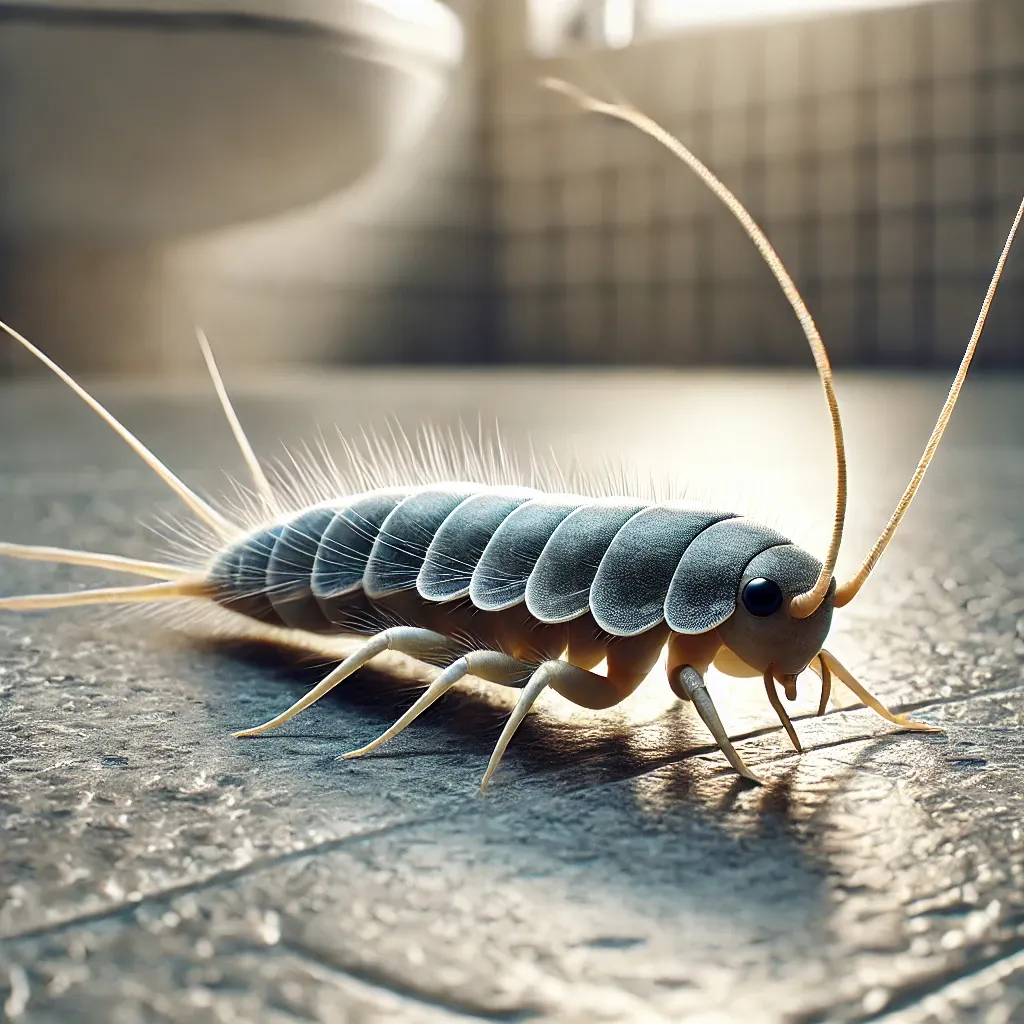
The air changes. Set the thermostat well up for the empty months, or switch the system off entirely, and the house runs warmer and damper than it does when somebody lives in it. Silverfish need moisture to survive, and what they want beyond that is dark, undisturbed space, which is a description of a closed Holiday closet in August. The garage full of cardboard boxes is worse, because corrugated cardboard is food and shelter in the same object.
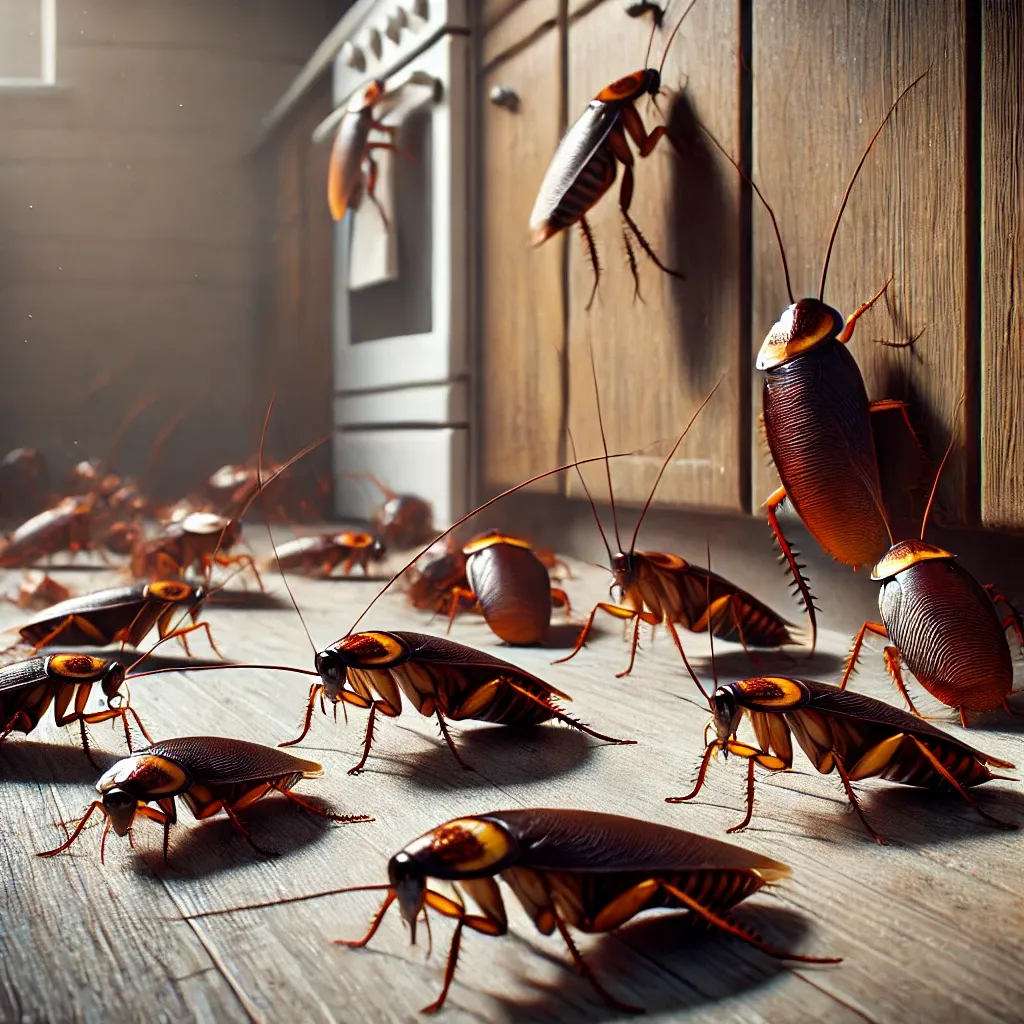
The drains open. This one catches the most people, and it is plumbing rather than entomology. Beneath every fixture is a bend in the pipe designed to retain a small standing volume, and that retained water is the entire barrier between your floor and the line running under the yard. Nothing about it can be latched or covered. It is liquid sitting in a warm building, so it goes away on its own if the fixture stops being used. American cockroaches make their living in drain and sewer infrastructure. Once the bend is empty there is no barrier left to weaken, only a continuous pipe. On a slab poured in the 1960s or 70s running its original lines, the distance between that pipe and a tile floor is very short.
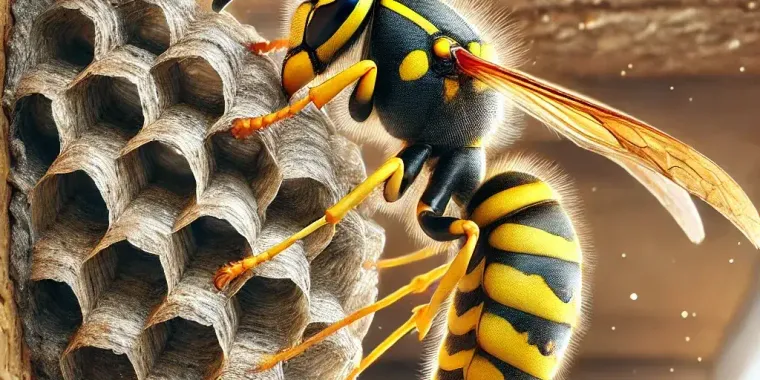
The exterior stops getting looked at. Florida rarely delivers the hard freeze that wipes out wasp colonies farther north, so fertilized queens overwinter tucked into bark and siding and begin building the moment it warms. In April a founding queen has a nest roughly golf ball sized and no workers at all, which makes early spring the moment to walk your eaves, soffits, shutters, and grill cover. By August that identical spot can hold a mature colony with a temper. On a house nobody opens between May and October, the founding stage runs unobserved from start to finish.
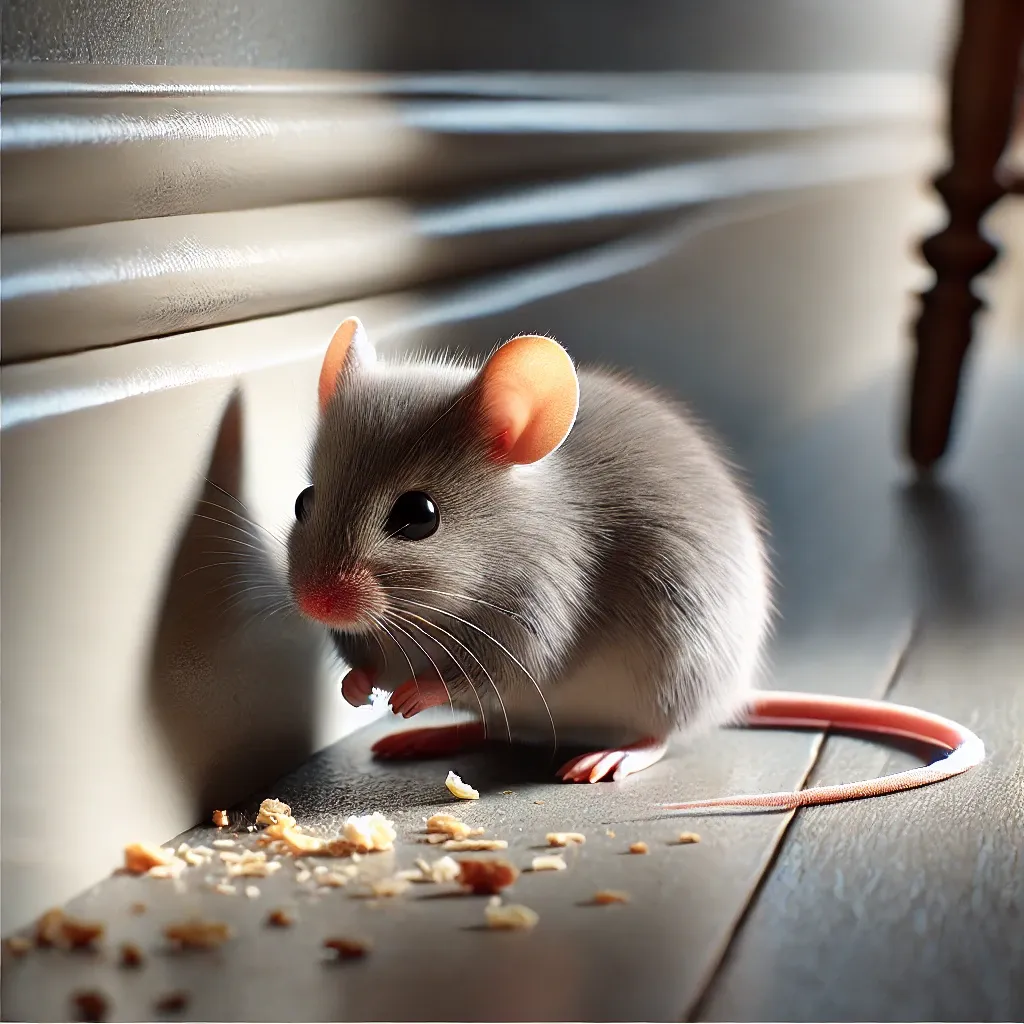
The attic gets quiet. What a roof rat is looking for is a high, dry, undisturbed place to raise pups, and Florida attics with tile or vented soffits supply it. Undisturbed is the operative word, and an empty house is the most undisturbed version of it available.
The Return in October
Play out the arithmetic on a house closed at the end of April. Somewhere in the middle of the summer a fixture loses its trap seal. A few weeks after that something arrives through it. In an occupied house that produces a sighting and a phone call. Here it produces nothing, and the same thing happens on the other side of the house, and the wasp colony under the soffit reaches full strength in August while the attic works on its own project.
None of that is a catastrophe. It is a normal Florida house running unattended, and every item on the list is a routine job taken individually. What the closed months do is stack the jobs and let each one mature. A returning owner is not walking into worse pests than a neighbor who stayed. They are walking into five months of accumulated head start on problems the neighbor solved one at a time in the week each one started.
The practical response is unglamorous. Anyone looking in on the property should turn on the taps and flush the toilets, not just scan ceilings for water stains. The eaves get a look before the closed season rather than after it. And the first days back are an inspection before they are an unpacking: soffit line, garage floor drain, closets, attic hatch, stored boxes. Our palmetto bug guide covers the drain route in detail, and the roof rat guide covers what an attic sounds like before it looks like anything.
The Street Effect
On a block where a fifth of the houses are seasonal, this stops being a private matter. A structure that sits closed for months is a place where a population can establish without interruption, and populations do not respect lot lines once they exist. Rodents range well past the building they den in. Ants send winged queens out after a rainy stretch that land wherever they land. American roaches travel the shared infrastructure under the street.
This is not an argument about anyone’s neighbor, who is doing nothing wrong by owning a house they use half the year. It is a reason the exterior of a year round Holiday home earns more attention than the same house would need on a fully occupied street. The perimeter is the layer that intercepts arrivals, and on these blocks it is doing more work.
Houses in Their Sixth Decade
The Forest Hills, Colonial Hills, and Holiday Lake Estates streets filled in during the development wave that followed the naming, which puts most of that housing between fifty and sixty years old. Age is a counting problem more than a condition problem. Exterior caulk, weatherstripping, vent screens, and door sweeps installed at construction have all quietly aged past usefulness, and every utility retrofitted since then arrived through an opening somebody cut on purpose. Central air the builder never installed, then its replacement. Cable, then internet. A water heater changed out. A bathroom repiped. A dryer exhaust rerouted to the opposite side of the laundry room. Individually none of that registers as a pest issue. Added up it is a list, and a maintained older house frequently carries a longer one than a run down newer house does. On these blocks our inspections start at the garage door seal, the weep holes, the soffit joints, and the utility penetrations, since houses of this vintage put their openings in predictable places.
The Coast Still Counts
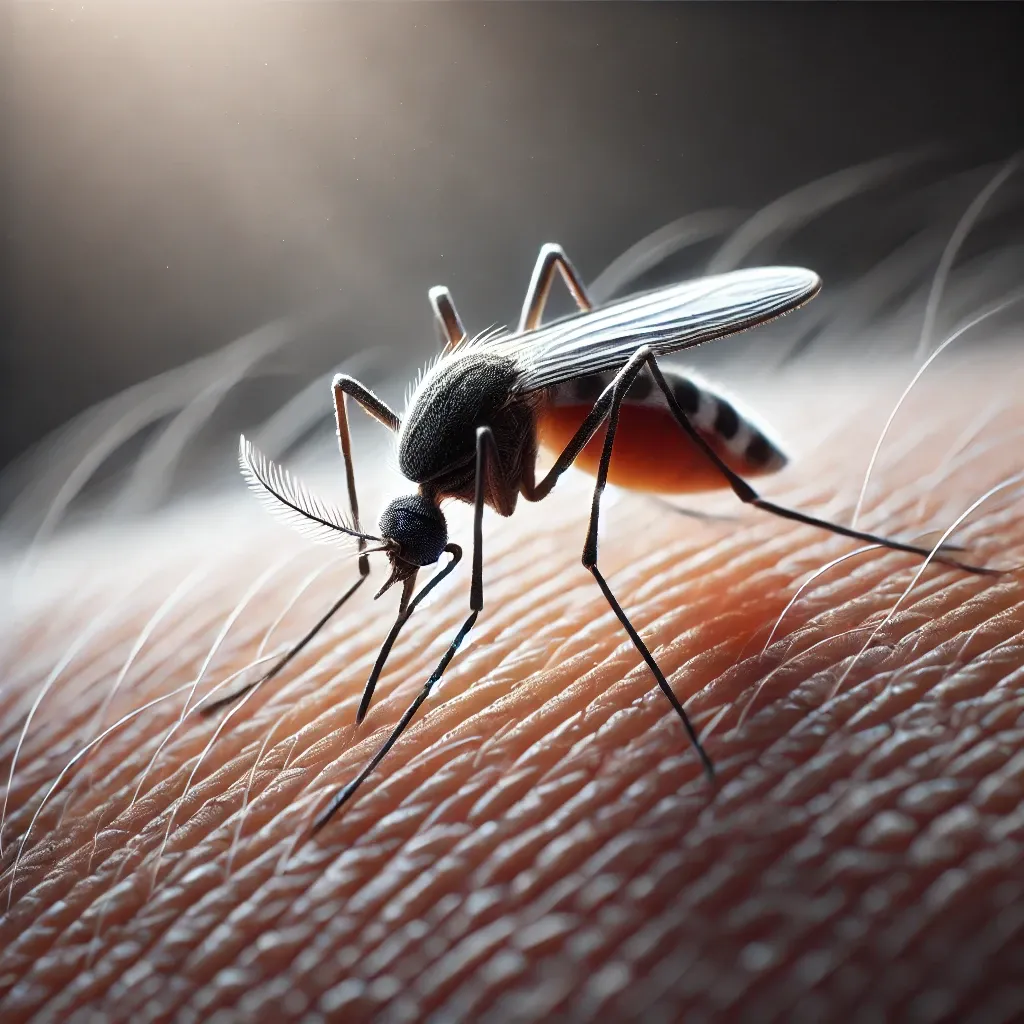
Holiday sits on the coast and the coast contributes. Anclote River Park, Gulf Park, and Key Vista Park put shoreline and river corridor inside easy flight range of most of the community, and coastal Pasco holds its water: low ground, sandy soil over a high water table, and June through September storms with nowhere to drain in a hurry. Mosquito work here aims at the layer a property owner actually controls: the things on your lot holding water, and the dense shade where adults sit through the heat of the day. On a part year property that layer is precisely what goes unmanaged, because the boat cover, the plant saucer, and the sagging gutter section keep refilling all summer with nobody around to tip them.
Holiday got its name from a street on a plat because a banker in Tarpon Springs liked the sound of it. Six decades later the community that name landed on keeps a calendar most of Tampa Bay does not, and nothing living in the walls has ever consulted it. Liberty Pest Management is family owned and works this coast out of Odessa: 813-961-2627, or request a free quote online.
Neighborhoods We Serve in Holiday
Don't see your neighborhood? If you're in or around Holiday, we cover you: reach out or call 813-961-2627.
Holiday Pest Control Questions
We close the house up from May to October. What are we walking back into?
Whatever started in June, plus four months of it. The pressure on an empty Holiday house is no different than on an occupied one. What changes is that nobody is there to notice. A wasp comb goes up under an eave, a drain trap dries out, an attic gets a tenant, and every one of those has a first week when it is small and cheap to fix. In a closed house that week passes unwitnessed. The most useful thing a returning owner can do is treat the first days back as an inspection rather than an unpacking, and the same goes for whoever looks in on the place while you are gone.
Why does the guest bathroom get palmetto bugs and no other room?
Because that room is out of rotation. The bend below each fixture is engineered to retain a little standing water, and that retention is the whole barrier between your floor and the sewer line. It fails without breaking. In a warm house the water simply evaporates, and what remains is continuous pipe. That is why the sighting lands in the bathroom nobody uses and never in the one the family runs daily. Turning the tap on refills it.
The house next door is empty most of the year. Is that our problem?
It is a factor and it is nobody's fault. A structure that sits closed becomes a place where things can settle in without interruption, and pests do not stop at a property line once they are established. That is not a complaint about your neighbor, who is doing nothing wrong by owning a second home. It does mean the exterior of your house is worth more attention than the same house would need on a fully occupied street, because the perimeter is where you intercept what moved in over there.
Our house went up in 1972. Does the age itself matter?
It matters as arithmetic, not as a diagnosis. Tally the utilities routed through the shell of a fifty year old Holiday house after the builder left: central air the plans never included, then the unit that replaced it, cable, internet, a bathroom repiped, a dryer vent relocated, a hose bib added. Each of those was an opening cut by a person. No single one is alarming. The total is a list, and going down that list and closing what is open is the durable half of the job.
Is Holiday far enough out that service costs more?
No. Holiday sits in Pasco, and so does Odessa, where the office is. Nothing in west Pasco gets billed as a trip charge or treated as the far end of the map. Estimates cost nothing and you hear the number before anyone does any work.
Nearby Service Areas
Ready for a Pest Free Home in Holiday?
The Liberty Pest family answers its own phone. Call 813-961-2627 or request a free quote. One family, one Odessa office, since 2007.