Found a nest? Step back before you do anything else.
Most stinging insect encounters around Tampa Bay homes end without a single sting, because most of what builds nests here would rather ignore you. The real risk comes from a few specific insects (yellowjackets in the ground, paper wasp colonies at their late summer peak, the occasional bald-faced hornet nest) and from the mistakes people make in the first five minutes: swatting, spraying at midday, or sealing the entrance hole. Here’s how to identify what you’re looking at, which nests you can safely ignore, and what to do about the rest.
Key Takeaways
- Never seal a nest entrance. Trapped yellowjackets will chew through drywall to find another way out.
- Yellowjackets nest underground in Florida’s dry sandy soil. Lawnmower vibration is the classic trigger for a mass sting event.
- Mud daubers and cicada killers look alarming but almost never sting, and most need no treatment at all.
- Wasp colonies peak in late summer, and Tampa Bay’s mild winters mean no reliable die-off.
- Hives away from the sting site, throat swelling, or trouble breathing after a sting means call 911. Anaphylaxis moves fast.
Which Stinging Insects Build Nests Around Tampa Bay Homes?
Six insects account for nearly every stinging insect call we run, plus one that most people forget is a stinging insect at all.
| Insect | Where it nests | Sting risk | What to do |
|---|---|---|---|
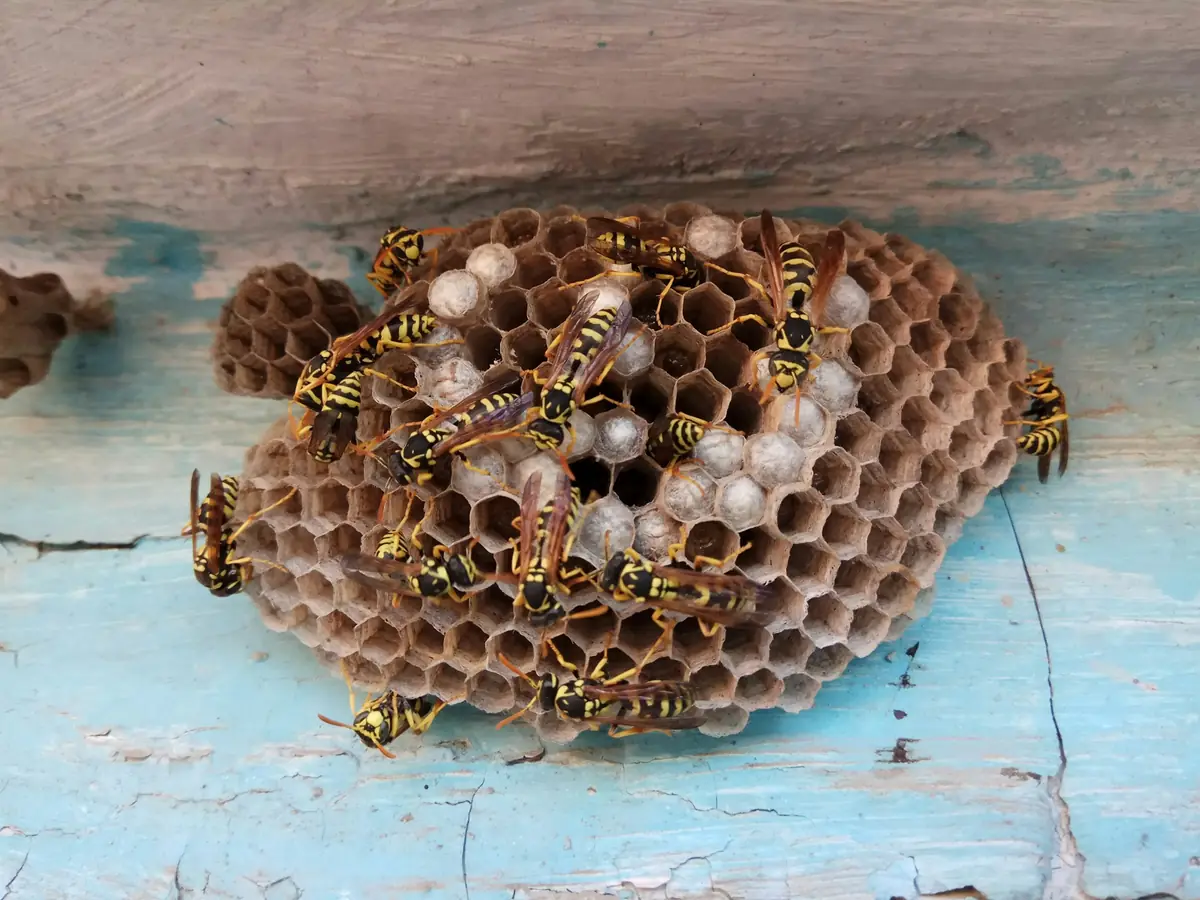
| Paper wasps | Open comb under eaves, soffits, shutters, grills | Moderate. Defends the nest only | Small spring nests can be DIY; summer colonies shouldn’t be |
| Yellowjackets | Underground in dry sandy soil, wall voids | High. Swarms at vibration, stings repeatedly | Flag the spot, keep mowers away, call a pro |
| Bald-faced hornets | Gray football shaped nest in trees, gable ends | High. Defends a wide perimeter | Professional removal, no exceptions |
| Mud daubers | Mud tubes on walls, lanais, garages | Very low. Solitary, rarely stings | Scrape old tubes off. Treatment usually unnecessary |
| Cicada killers | Burrows in bare sandy ground, midsummer | Low. Males can’t sting, females rarely do | Tolerate, or thicken turf over bare spots |
| Honey bees | Tree hollows, wall voids, meter boxes | Moderate. Africanized colonies defend en masse | Don’t spray. Relocation or licensed removal first |
| Fire ants | Dome shaped soil mounds in sunny turf | High. Dozens of stings in seconds | Treat mounds; don’t kick them to check |
Paper wasps: the eave and soffit builder
The open umbrella shaped comb with visible hexagonal cells is a paper wasp nest: under eaves and soffits, behind shutters, inside grill covers and mailboxes, under pool cage rails. A single queen starts the nest in spring; by August that golf ball sized start can be a comb the width of a dinner plate with dozens of defenders. Paper wasps ignore you away from the nest but defend the comb itself, and late summer colonies defend it hard.
Yellowjackets: the ground nest and the lawnmower
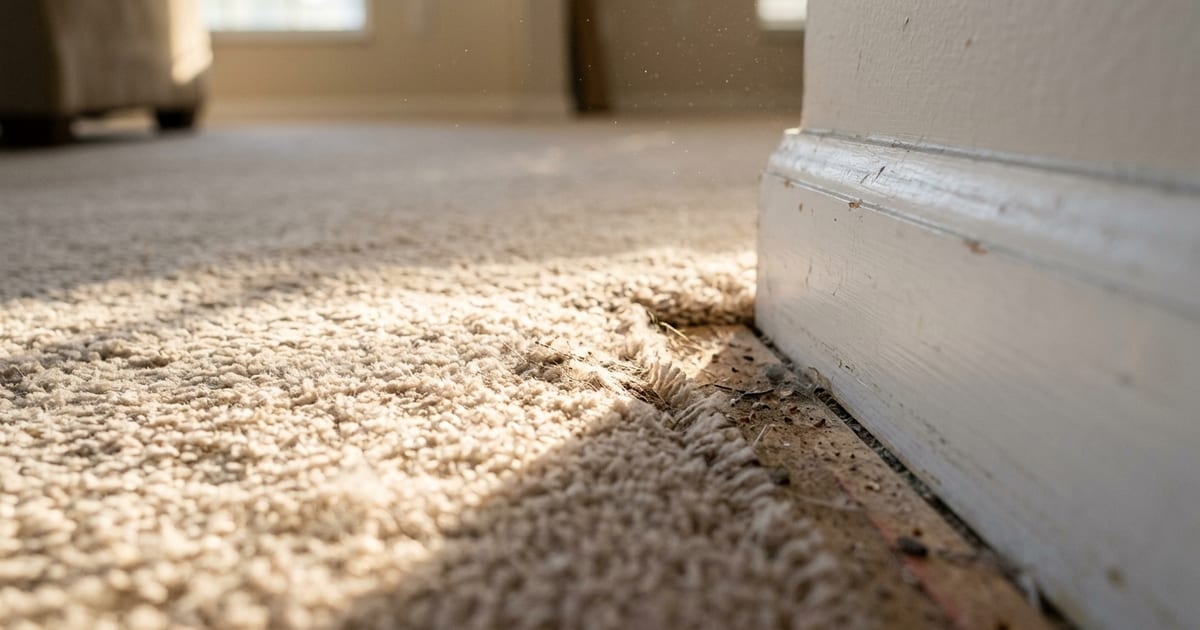
Yellowjackets are the reason “I was just mowing the lawn” is a sentence we hear so often. In Florida they typically nest underground, favoring the dry sandy soil that covers most of Pasco County, including the yards we service around Odessa. The entrance is a quiet, easy to miss hole in the turf. When a mower or string trimmer passes over it, the vibration reads as an attack, and dozens of workers pour out. Unlike a honey bee, each yellowjacket can sting repeatedly.
Bald-faced hornets: the gray football
That gray paper football hanging in a tree, shrub, or off a gable end belongs to bald-faced hornets, actually a large aerial yellowjacket with white facial markings. Tampa Bay sits at the southern edge of their range, so finding one here is uncommon, but when it happens, they defend a wider zone around the nest than anything else on this list. This is not a DIY nest at any size.
Mud daubers: mostly harmless
Those mud tubes on your lanai wall or garage ceiling belong to mud daubers, and they almost never sting anyone. They’re solitary wasps with no colony to defend, and they spend their days hunting spiders. One local species preys heavily on widows. If the tubes bother you, scrape them off with a putty knife. You don’t need to pay anyone to “treat” mud daubers. Be skeptical of anyone eager to sell you that.
Cicada killers: big, loud, and bluffing
In July and August you may see wasps nearly two inches long patrolling low over bare sandy patches of lawn, diving at anything that moves. Cicada killers are solitary burrow nesters. The dive-bombing patrollers are males, which physically cannot sting; females can but essentially never do. The lasting fix isn’t chemical. It’s thickening the grass over the bare ground they need for burrows.
Honey bees: the one we don’t want to exterminate
A cluster of bees on a branch is usually a swarm resting mid-move; it typically leaves within a day or two. Bees flying steadily in and out of a wall void, soffit, tree hollow, or meter box are an established colony. That’s a different story. Florida adds a complication: Africanized honey bees are established here, and according to UF/IFAS they can’t be reliably distinguished from European honey bees by sight. The difference shows in defense: an Africanized colony sends far more defenders and pursues much farther. Give any established colony distance.
Our position is simple: honey bees are pollinators, and we don’t exterminate pollinators unnecessarily. For accessible colonies, relocation by a beekeeper or licensed bee removal specialist is the right first option. And never spray a colony inside a wall: the abandoned brood and honey melt in Florida heat, soak into drywall, and draw roaches, ants, and rodents for months.
Fire ants: the stinging insect everyone forgets
Nobody calls fire ants “stinging insects,” but that’s exactly what they are. Red imported fire ants sting, not bite, and a disturbed mound puts dozens of stings on an ankle in seconds, each raising the signature white pustule, and they trigger serious allergic reactions just as wasps do. If dome shaped mounds are appearing in your lawn, see our guide to getting rid of fire ants in your Florida yard or our ant control service.
What Should You Do the Moment You Find a Nest?
- Back away calmly. Give an active nest 10 to 20 feet. Walk, don’t run, and don’t swat: a crushed wasp releases alarm pheromone that recruits its nestmates.
- Mark the area. Flag ground nests so kids, pets, and the lawn crew keep clear, and skip mowing near the entrance.
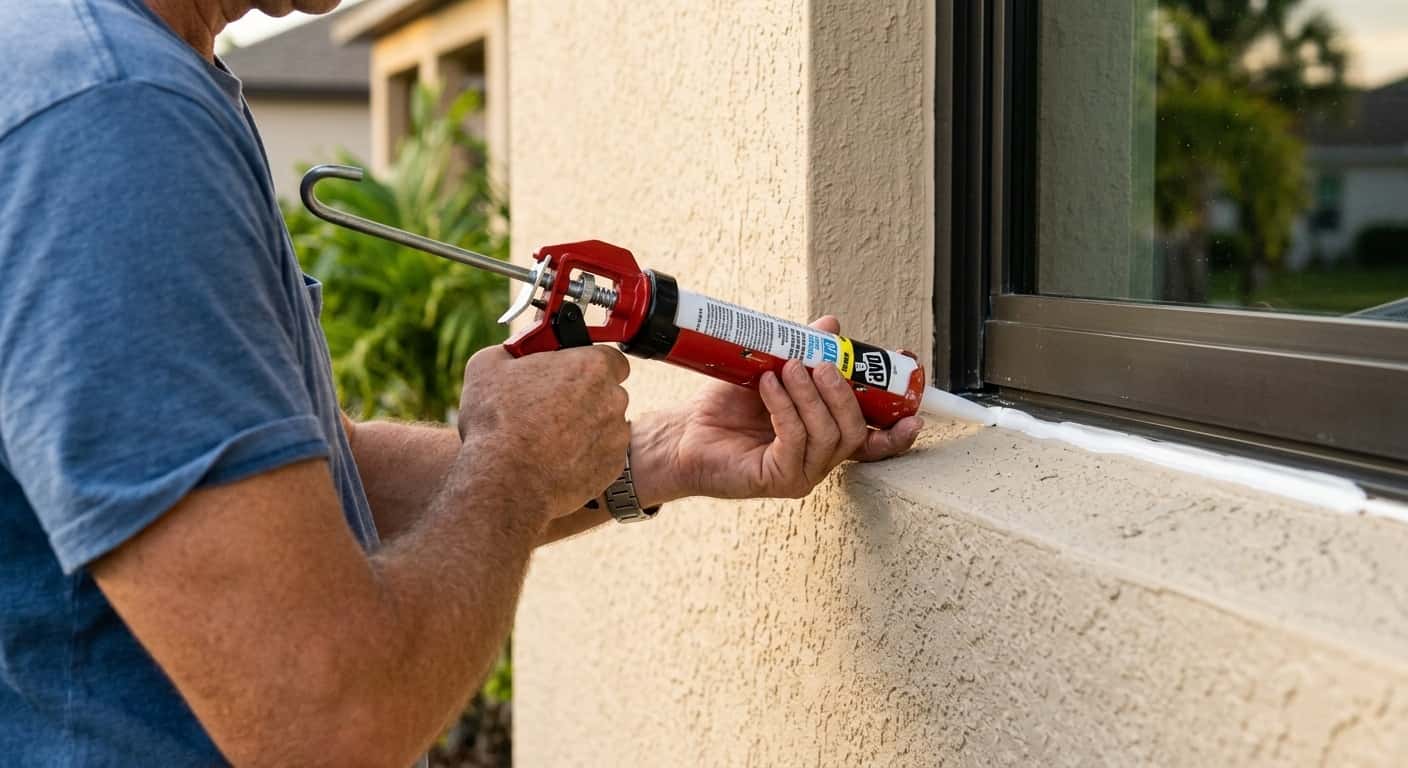
- Never seal the entrance. Caulking the hole feels productive and is the single worst move. Trapped yellowjackets chew through drywall and emerge indoors, agitated.
- Don’t spray at midday. Foragers are out and defenders are ready. Treatment happens at dusk or dawn, when the whole colony is home and sluggish.
- Identify before you act. Many “wasp nests” we’re called about are mud daubers or cicada killers needing no treatment.
When Is DIY Nest Removal Reasonable, and When Isn’t It?
DIY is reasonable when all of these are true: it’s a paper wasp nest around golf ball size, early in the season with only a handful of wasps on it, reachable without a ladder, nobody in the household has a history of serious sting reactions, and you act at dusk with a clear exit path.
Call a professional when any of these are true:
- It’s a yellowjacket ground nest or anything nesting inside a wall void
- It’s a bald-faced hornet nest, at any size
- Reaching it requires a ladder: a startled retreat from six feet up is the real danger, not the stings
- It’s late summer and the colony is large and defensive
- It’s honey bees: relocation or licensed removal comes first
- Anyone in the home is allergic
Our wasp and hornet control service covers identification, safe removal in protective gear, and treating the site so the colony doesn’t rebuild. If you’re on the fence, our guide on when to call an exterminator covers the broader warning signs.
What’s the Right First Aid for a Sting, and When Is It an Emergency?
For a normal sting: move well away from the nest, then wash the site with soap and water and apply a cold compress in ten minute stretches. If a honey bee stinger is embedded, scrape it out quickly with a fingernail or card edge. An oral antihistamine, used per its label, helps with itching.
Watch the person for the next 30 to 60 minutes. Call 911 immediately if you see any of these anaphylaxis warning signs:
- Hives or itching spreading far from the sting site
- Swelling of the face, lips, tongue, or throat
- Wheezing, tightness, or any difficulty breathing
- Dizziness, faintness, or collapse
- Nausea, vomiting, or stomach cramping shortly after the sting
Anaphylaxis can develop within minutes, and anyone with a known allergy should use their prescribed epinephrine auto-injector without waiting for symptoms to worsen. According to the CDC, hornet, wasp, and bee stings kill dozens of people in the United States every year, most from allergic reactions. Several dozen stings at once also warrant medical evaluation even without an allergy.
Frequently Asked Questions
Do wasp nests in Florida die off in winter?
Not reliably. Tampa Bay rarely gets cold enough for the hard freeze that ends colonies up north, so paper wasps stay active in warm winter stretches and some yellowjacket colonies carry into a second year, growing unusually large. Never assume a Florida nest is dead just because it’s January.
How can I tell honey bees from yellowjackets?
Honey bees are fuzzy, amber to brown, and fly a slower, heavier pattern to and from one steady entrance. Yellowjackets are sleek, bright yellow and black with a defined waist, and fly fast and straight. The right response is opposite: relocation first for bees, treatment for yellowjackets.
Does Liberty Pest Management remove honey bees?
We don’t exterminate healthy, accessible honey bee colonies. We’ll help you identify what you have, and if it’s honey bees, we’ll refer you to a beekeeper or licensed bee removal specialist for relocation. Wasps, hornets, yellowjackets, and fire ants we handle directly.
Found a Nest You’d Rather Not Handle?
Send us a photo from a safe distance and we’ll tell you what it is, including when the honest answer is “that’s a mud dauber, leave it alone.” Liberty Pest Management is family owned, based in Odessa, serving Tampa Bay since 2007, and licensed by the State of Florida (JB-151032). Contact us and we’ll handle the nest safely, at the right time of day, in the right gear.