Density does not invent new pests. It shortens the distance between a population and your door.
Nowhere in Tampa Bay does that matter more than in Pinellas County. Pinellas is the most densely populated county in Florida, with roughly three thousand people sharing every square mile. The roaches there are the same American cockroaches we treat in Pasco. The rats are the same roof rats. What changes is the geometry: houses share fence lines, attics sit a driveway apart, and a pest population two streets over is much closer to your kitchen than the same population would be on an acre lot in Odessa.
The practical consequence is uncomfortable but useful. In a county this tight, the ceiling on what one household can accomplish alone is lower than it is elsewhere. Knowing that should change what you spend your effort on.
Key Takeaways
- Pinellas is Florida’s most densely populated county, at roughly 3,000 people per square mile
- Density does not change which pests you get, only how fast they reach you and how far your own efforts carry
- Shared drain infrastructure, touching tree lines, and block scale container water are all problems that cross property lines by design
- On tight lots, perimeter and exclusion work returns more than chasing individual insects indoors
- The arithmetic argues for treating your property line as the real boundary rather than your walls
The Arithmetic, Stated Plainly
Put two identical houses in two different places. Give each one the same homeowner doing the same reasonable things: emptying plant saucers, keeping the kitchen clean, sealing what they can find.
House A sits on a half acre with sixty feet of yard on every side. When that homeowner clears their property, they have cleared a real buffer. Whatever is breeding at the neighbor’s has to cross open ground to reach them.
House B sits on a Pinellas lot where the side yard is a walkway and the fence is a shared one. That same homeowner does the same work and clears a buffer you could cross in a few steps. Their effort was identical. The result is not, because the distance a pest has to travel to undo it is a fraction of what House A’s neighbor faces.
Three Mechanisms That Cross Property Lines
Some pest problems do stay inside a house. A German cockroach infestation that arrived in a grocery bag can, in a detached home, be contained to that home. Others are block level by construction, meaning the shared thing is the habitat itself.
Shared drain infrastructure
American cockroaches, the ones most Floridians call palmetto bugs, do not primarily live in houses. They live in the drain and sewer lines underneath them, and in the mulch beds and storm drains outside. In Pinellas that infrastructure is old. The county ran out of room to expand outward decades ago, and with almost no raw land remaining, its houses average older than the inland suburbs we service. Whole streets of concrete block homes went up in the 1950s and 60s around Clearwater and the towns beside it, and plenty of those midcentury ranches are still running the drain lines they were built with.
Those pipes run under whole blocks. That is not a defect, it is how plumbing works. But it means the roach population under your street is one population with many exits, and your kitchen is one of them. This is why the spray and pray approach fails so reliably in these neighborhoods, a pattern our palmetto bug guide walks through in detail. You are killing visitors and leaving the road untouched.
The homeowner habit that actually matters here is a small one. A drain trap holds a plug of water that seals the pipe off from the room. When a guest bathroom or a laundry sink goes a month unused, that water evaporates and the seal opens. Pouring a cup of water into each rarely used drain about once a month keeps that plug in place. In a dense older neighborhood that habit does more than most of what you can buy at a hardware store.
Rooflines a driveway apart
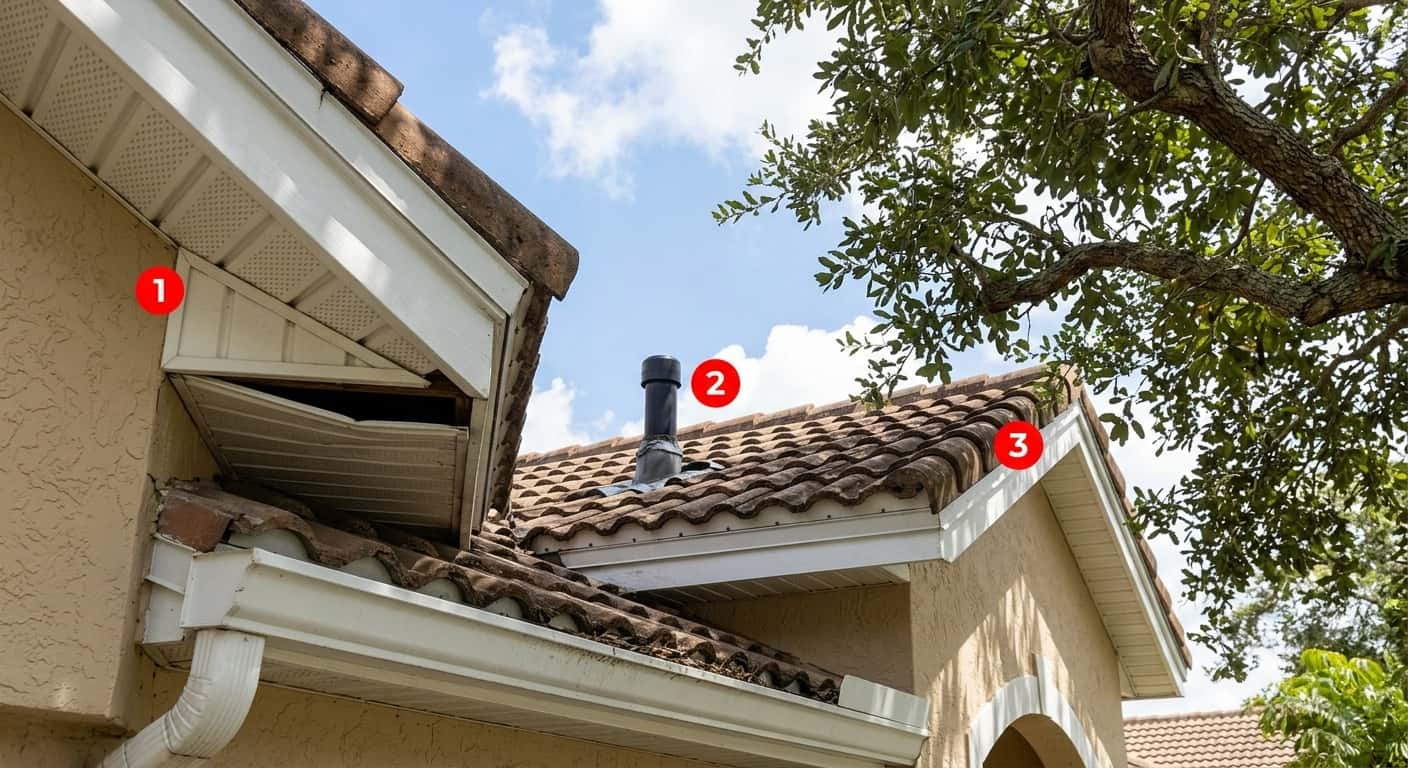
The mature palms and oaks are half the reason these streets are worth living on, and roof rats use them as a road network. Limbs reach the eaves, utility lines bridge whatever the limbs miss, and fifty years of settling leaves a roofline with openings a new build does not have.
On a tight lot, that canopy is continuous over several properties at once. One untreated attic infestation does not stay one attic. It becomes a source that seeds the street, because the animals are already using the trees as a corridor between rooftops. Fall is when this shows up, as cooling nights push rodents toward shelter.
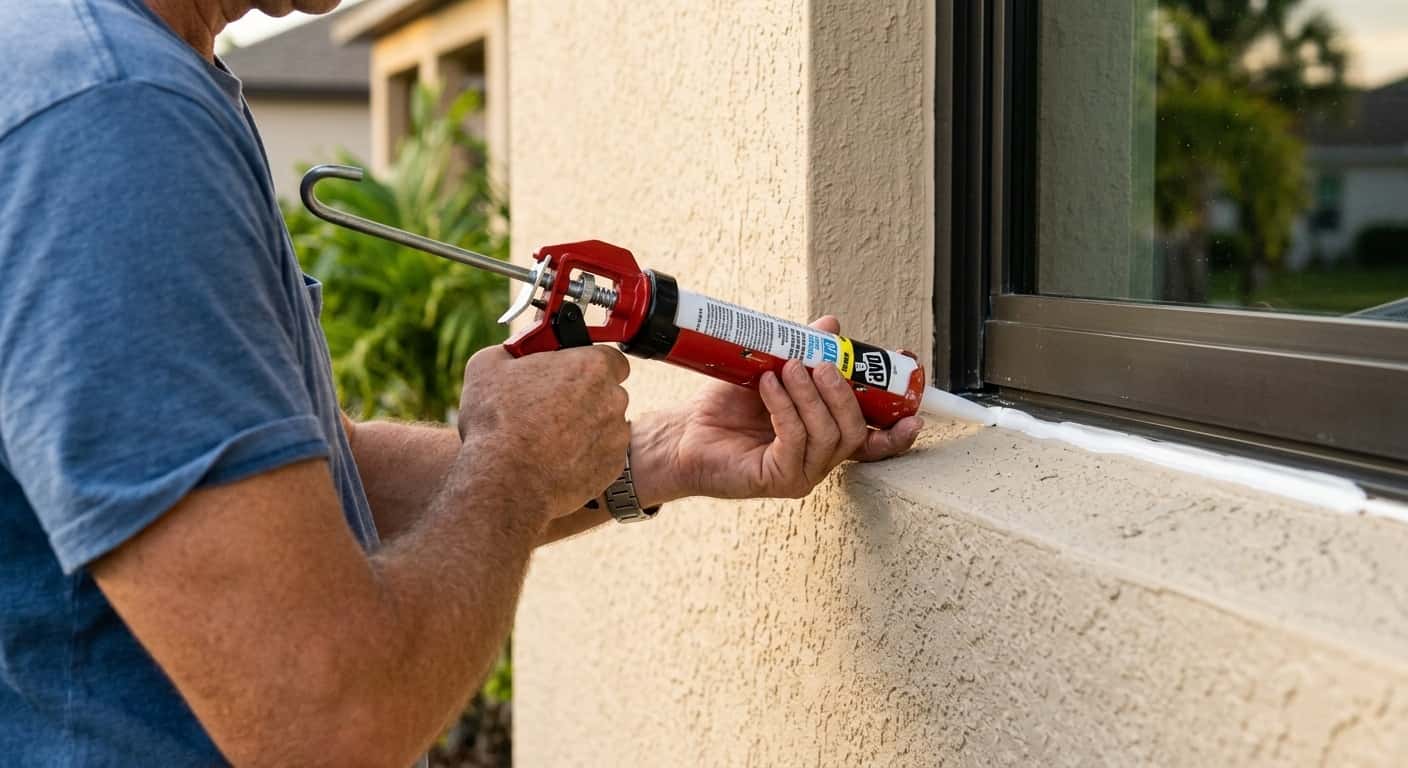
The response is exclusion, and exclusion is the one thing in this entire post that works entirely on your side of the line. Sealing your roofline, screening your vents, and trimming your own launch points does not depend on what anyone else does. It is why we lead rodent control with sealing rather than trapping in these neighborhoods. Our roof rat guide covers the attic evidence that tells you whether the corridor already ends at your house.
Container water at block scale
This is the clearest example of the arithmetic, and the fairest one, because everybody misses something.
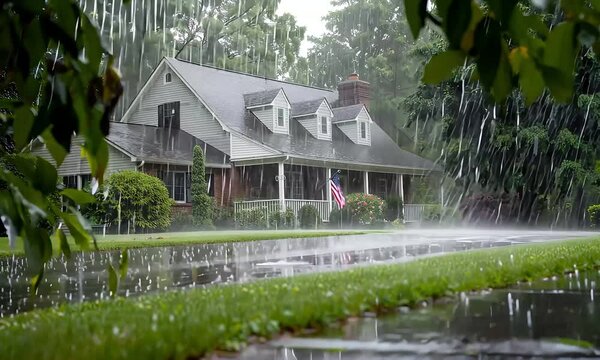
Storm season fills gutters, bromeliads, plant saucers, tarps, and flat roofs. A mosquito needs very little water and not much time. Now scale that up. Say forty households share a block and every one of them overlooks a single container. That street is now producing its own mosquitoes locally, on top of whatever arrives from the marsh, and public spraying does not undo it. The county’s mosquito program reaches all 24 municipalities and takes the job seriously, but any public program works at population scale on shared breeding ground. It was never built to find the saucer under your mango pot.
The forty households did not each fail. Each of them missed one thing, which is a normal human error rate, and density multiplied it into a shared outcome. That is why the yards along Lake Tarpon, which spreads across nearly four square miles in Palm Harbor, and the bayou streets of Tarpon Springs both need yard level work on top of the public program. Our mosquito season guide covers the timing that makes treatments hold through the wet months.
Water on Three Sides Makes the Maintenance Permanent
Pinellas geography compounds all of this. This is a peninsula with the Gulf on its western side, Old Tampa Bay on its eastern side, and the Intracoastal running the length of the gap between the mainland and the barrier islands. Tidal water is close to nearly every address in the county.
Salt air is the part homeowners underestimate. It works on screens, seals, and weatherstripping continuously, which means exclusion near the coast is never a finished job. The door sweep you installed three years ago is not the door sweep you have now. In Dunedin, Safety Harbor, and the waterfront blocks of St. Petersburg, a screen inspection belongs on the same mental calendar as changing an air filter.
Combine that with density and you get the county’s defining pattern. Your barrier degrades on a coastal schedule, and the pressure against that barrier arrives from closer than it would anywhere else.
What This Should Change About Your Priorities
Once you accept that one household’s ceiling is lower on a tight lot, the priorities reorder themselves.
Perimeter work beats interior chasing. Spraying a baseboard treats the insects that already got in. On a dense block the supply of replacements is close and steady, so interior work alone becomes a treadmill. The exterior perimeter, the entry points, and the drain routes are where a fixed amount of effort buys the most, because they act on arrival rather than on arrivals already made.
Early response beats waiting it out. In a low density neighborhood, waiting a few weeks to see whether a problem resolves is often reasonable. On a Pinellas block, waiting means the population two doors down keeps producing while your door stays open. The window in which a small problem stays small is shorter here. If you are unsure whether what you are seeing has crossed that line, our nine signs guide is a reasonable checklist.
Your property line is the real boundary, not your walls. Most homeowners defend the interior and treat the yard as scenery. Flip that. The fence line, the mulch beds against the slab, the tree limbs over the roof, and the containers holding water are the actual front. Vegetation touching siding is both a moisture trap and a bridge, and on a tight lot that bridge is short.
Treat the block as the unit of analysis, at least mentally. You cannot treat your neighbor’s yard and should not try. But if you know the roaches are coming from shared drain lines, you stop being surprised when a spotless kitchen still gets visitors, and you start spending your effort on the entries rather than on the countertops.
What a Company Can and Cannot Do About This
We should be direct about the limits. We can seal your home, treat your perimeter, work your drain routes, clear the resting habitat where mosquitoes wait out the heat, and handle the containers on your property. What we cannot do is treat a block. Nobody can, without every household on it agreeing.
What density changes on our side is emphasis. A single address treated in a vacuum returns less here than the identical visit would in a Pasco subdivision, so an inspection in Pinellas reads the surrounding street as evidence rather than looking only at the yard under our feet. That pushes weight toward exclusion, toward the exterior perimeter, and toward the routes pests use to arrive, and away from interior applications that look decisive on the day and get undone by Tuesday. It also means a repeating schedule earns more here than a one time visit, because the pressure against your barrier refills continuously.
Our full county overview, including the seasonal pattern and the pests each part of the county runs on, lives on our Pinellas County pest control page. City guides go deeper for Largo, Oldsmar, and the rest of the county.
The Short Version
A neighbor’s pest problem becoming your pest problem is not a story about neighbors. It is a story about distance, shared infrastructure, and continuous tree lines, and Pinellas has all three in greater concentration than any other county in Florida.
The useful takeaway is not to worry more. It is to spend your effort differently. Push it outward toward the perimeter, the entries, the water containers, and the roofline, because in a county where the next population is a hundred feet away instead of a thousand, that outer layer is doing most of the work.
We service all of Pinellas from our office in Odessa. The county is not next door to us and we do not claim it is, but every part of it is standard service area, and crossing the county line changes nothing about the service you get. Call 813-961-2627 weekdays 7am to 9pm or weekends 8am to 5pm, or request a free quote and tell us which street you are on. On a dense block, that detail tells us more than you would think.