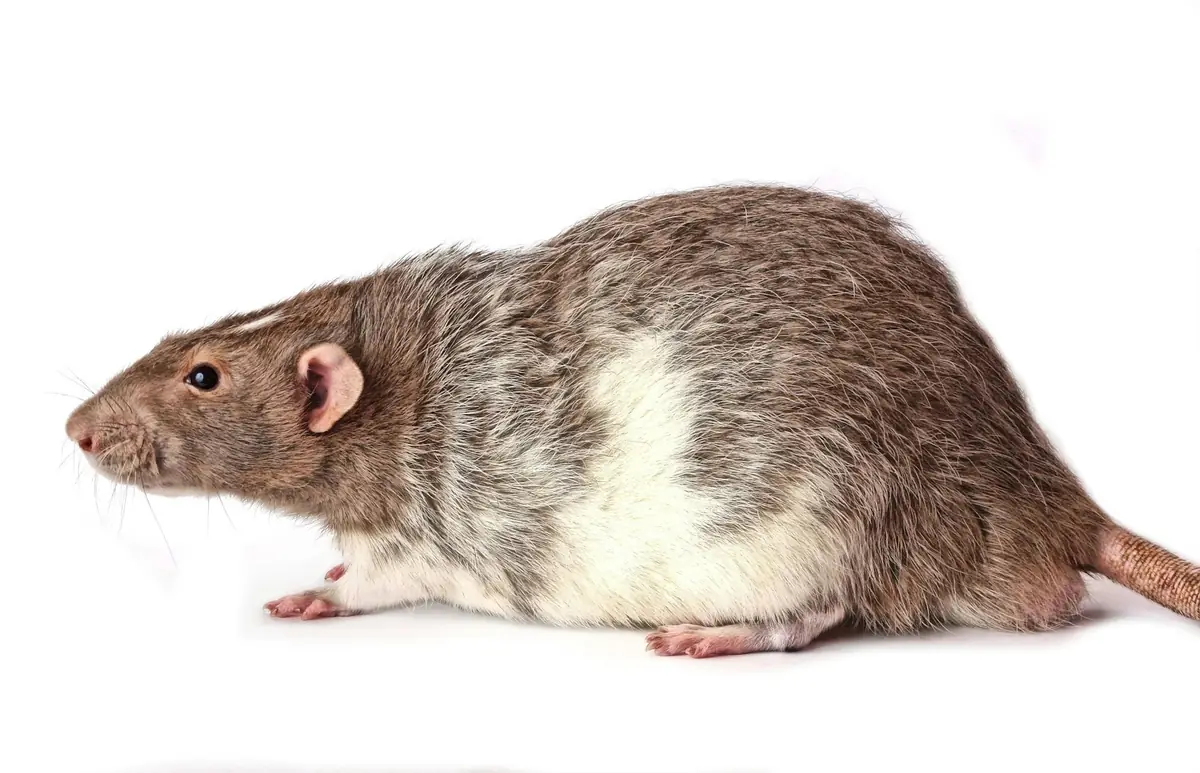
Five signs confirm a rodent infestation: droppings, gnaw marks, sounds in the walls or ceiling at night, greasy rub marks along travel routes, and nests or food caches. Any one of them deserves a closer look. Two or more together almost always means rodents are living in your home right now, not just passing through.
The trick is reading each sign correctly. Fresh droppings mean something different than old ones, and scratching at 2 a.m. points to a different animal than scampering at 7 a.m. Below: how our technicians read all five signs, what to do next, and what not to do.
Key Takeaways
- Fresh droppings are dark, glossy, and soft; old droppings are gray, dry, and crumbly. Fresh means active rodents today.
- In Florida, night sounds usually mean roof rats; daytime sounds usually mean squirrels. The clock is your best identification tool.
- Gnawed electrical wiring is the most urgent sign, because stripped insulation leaves bare wire against framing.
- Never seal entry points while rodents are still inside, and never use poison in an attic or wall void.
Sign 1: What Do Rodent Droppings Tell You?
Droppings are the most reliable sign because rodents can’t help leaving them. A single rat produces 40-50 droppings per day, and mice leave even more, scattered along every route they travel.
Where to look. Rodents hug edges, so droppings collect along baseboards rather than in the middle of rooms. Check the backs of kitchen drawers and pantry shelves, under the sink, behind the stove and refrigerator, along garage walls, and in attic corners near the air handler and stored boxes.
Fresh vs. old. Fresh droppings are dark brown to black, glossy, and soft enough to compress. Within a few days they turn dull, gray, and hard, and old droppings crumble to dust when pressed. A pile of dry, gray droppings could be from an infestation that ended years ago; shiny black ones mean rodents were there last night. If you clear an area and find new droppings within a day or two, the infestation is active.
What size and shape tell you. Droppings are also your best species clue, which determines the treatment approach.
| Animal | Droppings | Size | Shape |
|---|---|---|---|
| House mouse | Scattered everywhere along routes | 1/8-1/4 inch | Rice grain, pointed ends |
| Roof rat | Along beams, rafters, attic edges | About 1/2 inch | Spindle shaped, pointed ends |
| Norway rat | Ground level, garages, crawl spaces | About 3/4 inch | Capsule shaped, blunt ends |
| Squirrel | Clustered near entry hole and nest | About 3/8 inch | Barrel shaped, rounded ends |
In Tampa Bay, the half-inch spindle droppings of the roof rat are what we find most. Norway rats are far less common here than roof rats, which climb and nest overhead.
A safety note before you investigate. Don’t sweep or vacuum dry droppings; the CDC advises against it because dry sweeping can send particles from droppings and urine into the air. Ventilate the space, wear gloves, wet the droppings with a disinfectant solution, and wipe them up with paper towels.
Sign 2: Gnaw Marks and Wire Damage
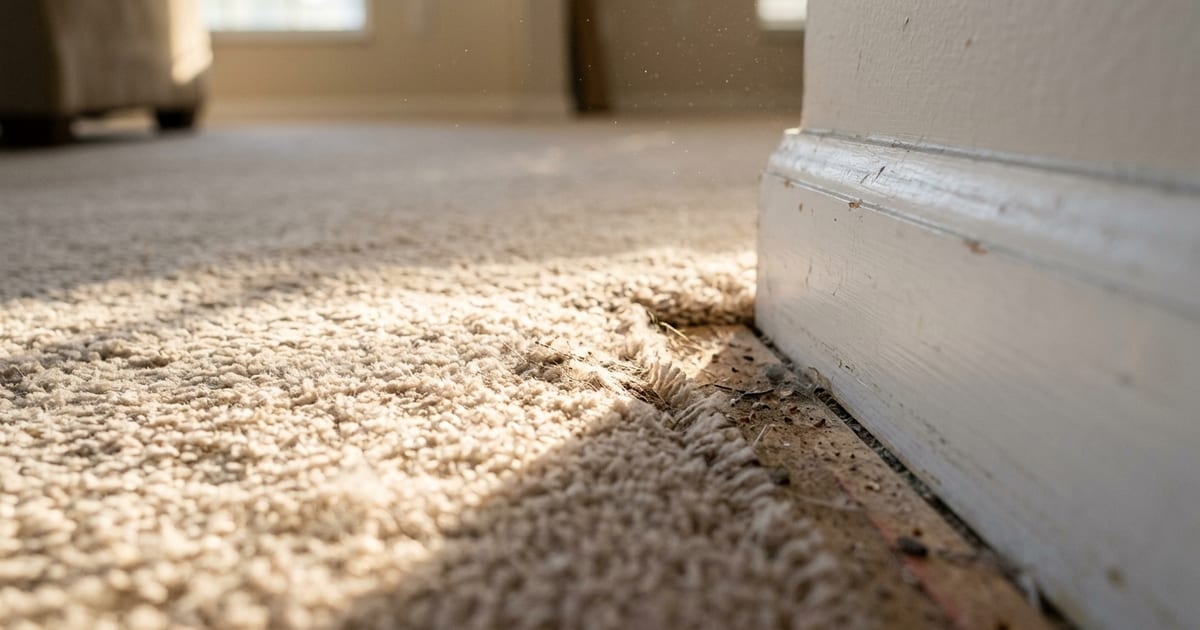
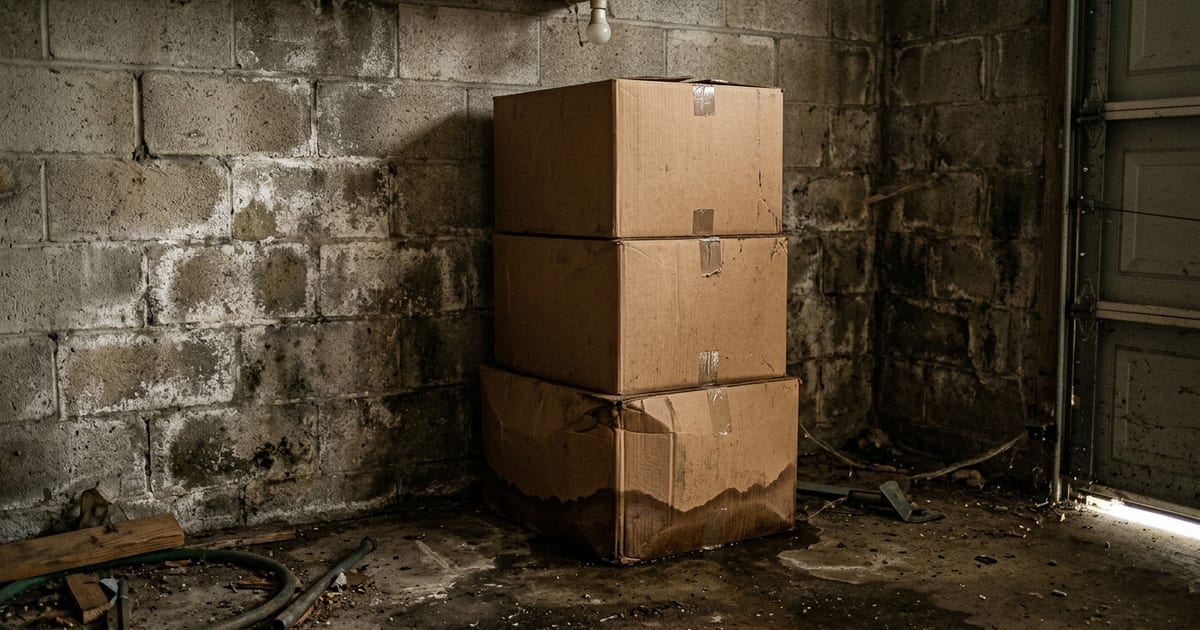
Rodent incisors never stop growing, so rats and mice gnaw constantly to keep them trimmed. Fresh gnaw marks are pale and rough with visible tooth grooves; older marks darken and smooth over. Mouse gnawing looks like fine scratches, while rat gnawing leaves larger, deeper grooves, often with shavings on the floor below. Check food packaging, cardboard boxes, door frames and baseboards, plastic storage bins, PVC plumbing lines, and the rubber weather seal at the bottom of your garage door.
The gnaw marks that matter most are on wiring. Once rodents chew the insulation off a wire, what’s left is exposed metal in a space nobody inspects, and the fire risk sits there quietly. In Florida garages we also find chewed wiring inside car engine compartments, where rodents nest against a warm block. Any chewed wiring is an active fire hazard: have a licensed electrician inspect it, and get the rodents out fast.
Sign 3: What Are Those Sounds in the Ceiling at Night?
Noise is usually the first sign homeowners actually notice, and in Florida the timing of the noise tells you what animal you have.
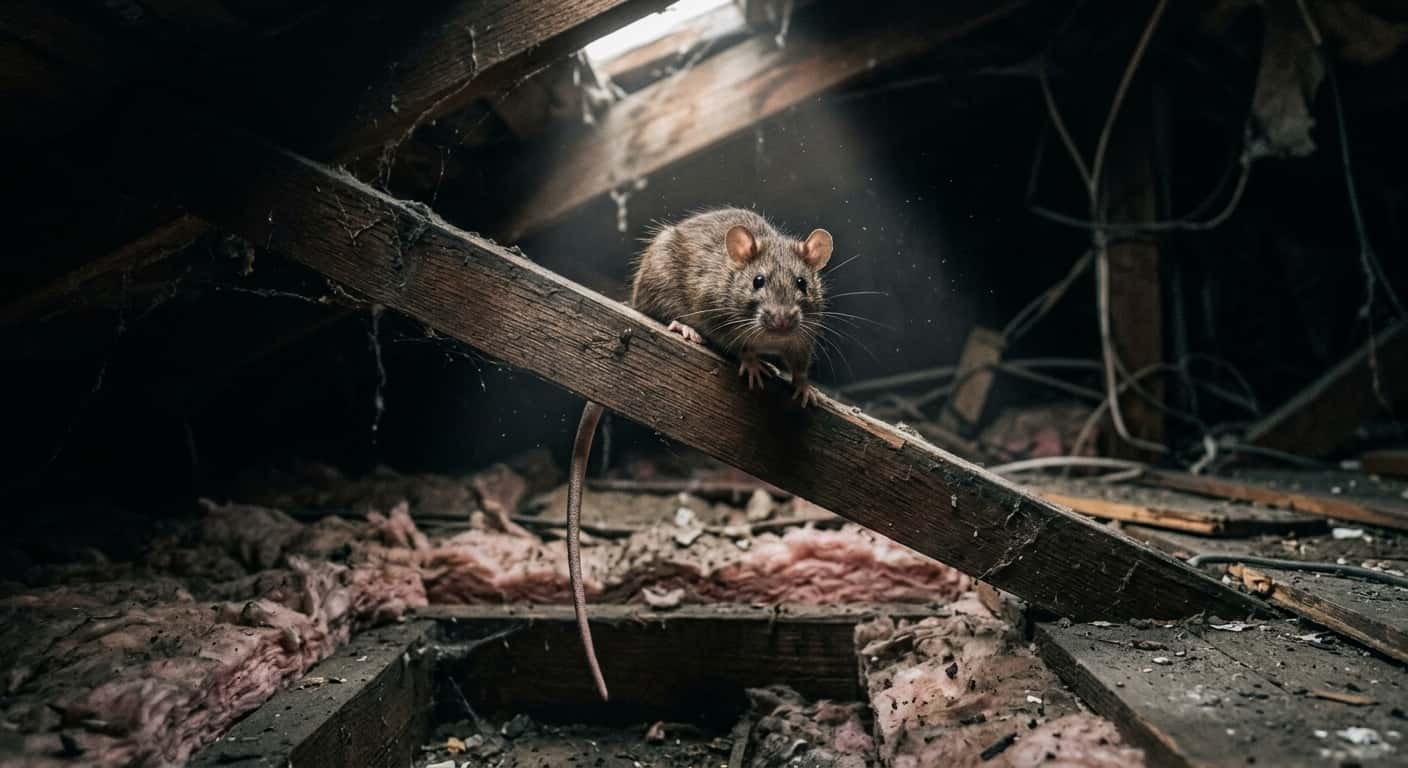
Roof rats sound like this. Light, quick scurrying and scratching that starts shortly after dusk and picks up again before dawn. Roof rats are nocturnal, so a quiet attic all day followed by activity between roughly 9 p.m. and 5 a.m. points strongly to rats. You may also hear soft, repetitive gnawing as they chew on framing or wiring, and the sounds travel, crossing the ceiling as rats run along joists and through wall voids.
Squirrels sound like this. Heavier scampering, rolling sounds, and activity during daylight, especially early morning and late afternoon. Squirrels are diurnal; they leave the attic to forage during the day and settle in before dark. Loud daytime noise with silence at night usually means squirrels, not rats. If that matches what you’re hearing, read our guide to squirrels and raccoons in Tampa Bay homes, because wildlife removal works differently than rodent control.
Sign 4: Rub Marks and Runways
Rodents are creatures of extreme habit. They travel the same routes every night, hugging walls and edges, and their oily fur deposits a dark, greasy film wherever their bodies repeatedly brush a surface.
Look for smudged, dark gray streaks along baseboards, on rafters and joists in the attic, around the edges of holes and gaps they squeeze through, and on pipes or beams they use as highways. The darker and greasier the mark, the longer the route has been in use. A heavy black rub mark around a gap in your soffit means that opening has been an active doorway for weeks or months.
In attics, look for runways in the insulation itself: flattened, trampled paths, sometimes with a faint tail-drag line down the middle and droppings along the edges. Not sure a route is active? Dust a light layer of flour or baby powder across it in the evening and check for footprints in the morning. Rub marks also matter for control: trap placement on established runways is what separates effective trapping from traps that sit untouched for weeks.
Sign 5: Nests and Food Caches
Rodents build nests from whatever soft material your home provides: shredded attic insulation, paper, cardboard, and fabric. A nest looks like a loose, messy ball of shredded material, usually tucked into an attic corner, a wall void, the back of a rarely opened cabinet, or a garage clutter pile.
Roof rats also cache food near the nest, and in Florida the caches have a distinctive signature: hollowed-out citrus. Roof rats gnaw a hole in an orange or grapefruit and eat it from the inside, leaving an empty rind shell. Find those under your citrus tree or, worse, in your attic, and you have roof rats. Caches of seeds, nut shells, dry pet food, and snail shells in hidden corners tell the same story.
A nest plus a food cache means the infestation is established and breeding, and roof rats breed year round in Florida’s climate, so it won’t stay small.
What Should You Do If You Find These Signs?
- Confirm activity. Note where you found droppings, whether they’re fresh, and when you hear sounds. This shortens the inspection and speeds up control.
- Cut off food tonight. Move pantry staples into sealed containers, store pet food in a lidded bin, don’t leave pet bowls out overnight, and pick up fallen fruit in the yard.
- Protect your family during cleanup. Gloves, ventilation, disinfectant, no dry sweeping.
- Get a professional inspection. Effective rodent control is a sequence: trapping, then exclusion (sealing every entry point), then sanitation. Skipping any step is why infestations come back. Our rodent control service handles the full sequence, and we inspect the roofline, not just the rooms, in homes from Odessa out to Carrollwood and beyond.
If the evidence points to roof rats specifically, droppings in the attic, night sounds overhead, hollowed citrus, our deep dive on roof rats in Florida attics covers identification, entry points, and the complete removal process step by step.
What Should You NOT Do?
- Don’t use poison indoors. A poisoned rat that dies inside a wall void produces a smell that lasts weeks, often somewhere you can’t reach without cutting drywall.
- Don’t seal entry points while rodents are still inside. You’ll trap them in your walls, where they’ll gnaw new exits or die in place. Exclusion comes after trapping, not before.
- Don’t rely on ultrasonic repellers. Rodents habituate to the sound within days; independent testing has repeatedly found these devices ineffective.
- Don’t leave empty traps sitting for weeks. Rats avoid unfamiliar objects, so a few days of nothing is normal. But if a full week of trapping catches nothing, the traps are in the wrong place or the rats have decided to route around them. Move them onto a rub mark or a runway rather than waiting longer.
Frequently Asked Questions
How can I tell if rodent droppings are fresh or old?
Fresh droppings are dark, shiny, and soft, like putty. Old droppings are gray, dull, and crumble when pressed with a gloved finger or a stick. If you clean an area completely and new droppings appear within a day or two, you have an active infestation with an established travel route through that spot.
How do I know if I have rats or mice?
Size the droppings. Mouse droppings are rice-grain sized, a quarter inch or less, while roof rat droppings run about half an inch with pointed ends. Rats also leave larger gnaw grooves and heavier rub marks. In Tampa Bay attics, rats are the more common find.
Do rodents in the attic ever just leave on their own?
No. An attic gives Florida rodents everything they need: shelter, nesting material, and easy access to food outside. Roof rats breed year round here, so a small problem compounds instead of resolving. The population only goes down when animals are removed and their entry points are sealed.
Are rodent droppings actually dangerous?
Yes. Droppings and urine carry bacteria and contaminate insulation, food prep surfaces, and anything stored nearby, and rodents are known carriers of a long list of diseases. That’s why cleanup calls for gloves, ventilation, and disinfectant rather than a broom or vacuum, which throw dried particles into the air you’re breathing.
Found One of These Signs? Act This Week, Not This Month
Every sign on this list gets worse with time: more droppings, more chewed wires, a bigger colony. A two-rat problem is a quick fix; a twenty-rat colony is insulation replacement and rewiring.
Liberty Pest Management is a family owned company based in Odessa, serving Tampa Bay since 2007 under Florida license JB-151032. Ask us for a free quote and find out exactly what’s leaving those signs behind.