
If you’ve never hired a pest control company before, or if your last experience was years ago, the process may feel unfamiliar. What actually happens during a visit? What do service plans include? How do you know if you’re getting good service or being oversold?
This guide covers what to expect from a professional pest control visit in the Tampa Bay area, how different service plans work, the questions you should ask before signing anything, and the red flags that signal a company you should avoid.
Key Takeaways
- A thorough first visit includes inspection, species identification, targeted treatment, and a prevention plan, not just spraying
- Quarterly plans are the Tampa Bay standard due to year-round pest pressure with no winter die-off
- Always verify a company’s Florida Department of Agriculture license before hiring
- The cheapest option isn’t always the best value. Look for callback guarantees and IPM-based treatment
What Happens During a Professional Pest Control Visit?
A quality first visit is more than a technician walking through your home with a sprayer. Here’s what a thorough initial service should include.
The Inspection
The inspection matters most. A qualified technician should:
- Walk the full exterior of your home, checking the foundation, roofline, soffits, garage, and landscaping for entry points and pest activity
- Inspect the interior, focusing on kitchens, bathrooms, attics, garages, and any areas where you’ve noticed pest activity
- Identify the species. Treatment varies significantly by pest. Ant bait doesn’t work on cockroaches. Rodent exclusion doesn’t address mosquitoes. Species identification determines the treatment plan.
- Document findings. You should know exactly what was found, where, and what the plan is
The Treatment
After inspection, the technician applies targeted treatment based on what they found:
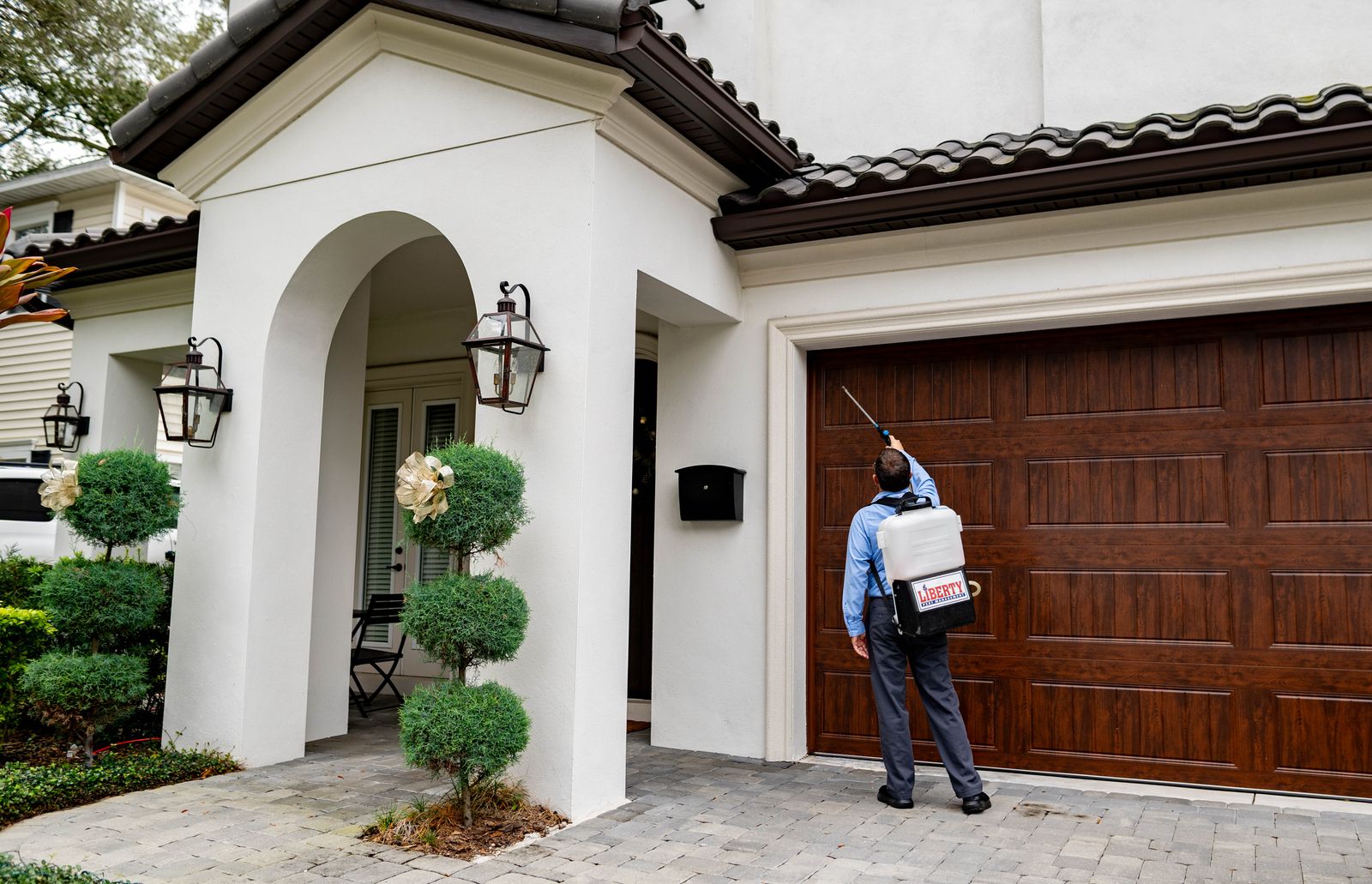
- Exterior perimeter treatment. A liquid barrier around the home’s foundation and entry points
- Interior treatment. Application to baseboards, entry points, under sinks, behind appliances, and in crevices where pests harbor
- Targeted applications. Gel bait for cockroaches, granular bait for ants, or exclusion materials for rodents, depending on the species identified
- Entry point recommendations. Identifying gaps, cracks, and openings that should be sealed to prevent future intrusion
What to Expect Afterward
- Pest activity may temporarily increase for 24-48 hours after treatment as pests are flushed from hiding spots. Normal.
- You should notice a significant decrease within 1-2 weeks
- A good provider includes a callback guarantee: if pests return between scheduled visits, they’ll come back at no extra charge
How Do Pest Control Service Plans Work?
Most Tampa Bay homes benefit from ongoing service rather than one-time treatments. Florida’s warm, humid climate means pests don’t die off in winter, they stay active year-round. Here’s how the common plan types compare.
Quarterly Plans (Tampa Bay Standard)
Four scheduled visits per year, one every 90 days. Each visit typically includes:
- Full exterior perimeter treatment
- Interior treatment of key areas (baseboards, entry points, kitchen, bathrooms)
- Inspection for new pest activity or entry points
- Callback guarantee between visits if pests return
Quarterly treatment maintains a chemical barrier around your home that breaks down over 60-90 days. The timing aligns with reapplication needs and Florida’s pest pressure cycle.
Monthly Plans
Twelve visits per year, recommended for homes with active infestations, persistent cockroach or ant issues, or properties near wooded or marshy areas with heavy pest pressure. Monthly service provides more frequent monitoring and treatment for faster control of established populations.
One-Time Treatments
A single visit for a specific problem. Useful for isolated issues, but in Florida’s climate, one-time treatments rarely provide lasting protection. The chemical barrier fades within weeks, and pest pressure from outside returns.
What Should Be Included (Not Extra)
Watch for plans that charge extra for things that should be standard:
- Callback visits between scheduled appointments should be included at no extra charge
- Interior treatment. Some budget plans only spray the exterior perimeter, which leaves indoor pests untreated
- Species-specific treatment. Cockroaches, ants, spiders, and silverfish should all be covered under a general pest plan
- Annual inspections. A thorough inspection at least once per year checking for new vulnerabilities
What Questions Should You Ask Before Hiring?
Not all pest control companies deliver the same quality. These questions help you separate the professionals from the corner-cutters.
About the Service
- “What pest species does this plan cover?” Some plans exclude specific pests like bed bugs, wildlife, or mosquitoes. Know what’s included before you sign.
- “Is the initial inspection free?” Liberty Pest Management offers free initial inspections.
- “What’s included in callback visits?” Good plans include free re-treatment if pests return between scheduled visits.
- “Do you use integrated pest management (IPM)?” IPM combines treatment with prevention and exclusion for longer-lasting results. Companies that rely solely on chemical spray are using an outdated method.
About the Company
- “Are you licensed by the Florida Department of Agriculture?” Required for all pest control operators in Florida. Ask for the license number and verify it.
- “How long have you been serving the Tampa Bay area?” Local experience matters. Florida’s pest species and climate create unique challenges that out-of-state companies may not understand.
- “What happens if I need to cancel?” Understand the contract terms, cancellation policy, and whether there are early termination fees.
About the Technicians
- “Will the same technician service my home each visit?” Consistency matters. A technician who knows your property can spot changes and new issues faster than someone seeing it for the first time.
- “Are your technicians state-certified?” Florida requires pest control technicians to pass certification exams administered by the Department of Agriculture.
Red Flags to Watch For
These warning signs indicate a pest control company you should avoid:
- Extremely low prices that seem too good to be true. The service likely cuts corners on product quality, visit thoroughness, or technician training
- Pressure to sign long-term contracts before the initial inspection. A reputable company inspects first, then recommends a plan based on what they find
- Extra charges for callback visits between scheduled service. This should be standard with any plan
- No clear explanation of what’s included vs. what costs extra. You should know exactly what you’re paying for
- Unlicensed operators. Always verify the Florida Department of Agriculture license. Licensed companies carry insurance and are accountable to state regulations
- “Spray and pray.” If a technician shows up, sprays the baseboards, and leaves in 10 minutes without inspecting or explaining anything, you’re not getting professional pest control
Why Prevention Beats Remediation
Every pest control professional will tell you the same thing: catching a problem early is always less expensive than waiting. Here’s why that’s especially true in Florida.
Florida’s Climate Accelerates Everything
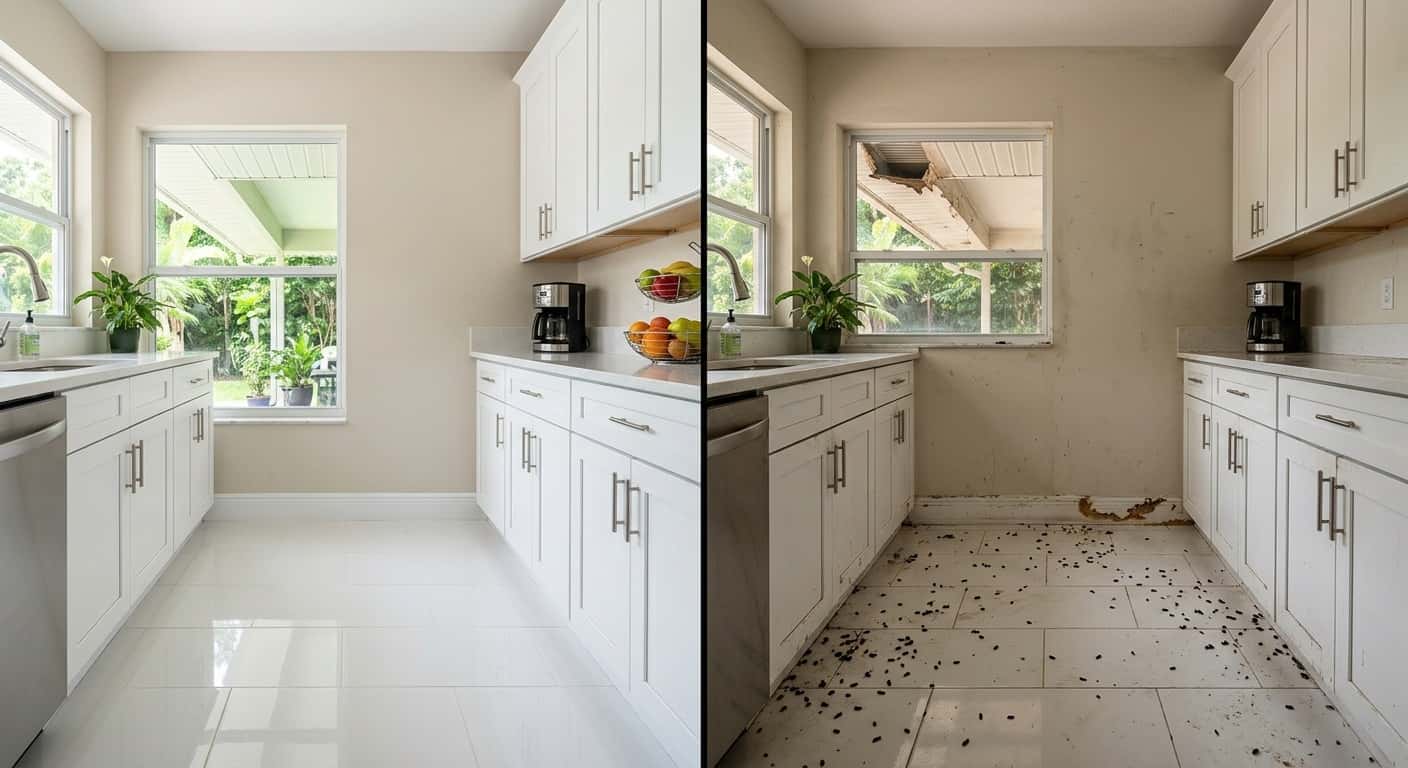
Pests don’t just survive year-round in Tampa Bay. They breed year-round. A cockroach population that’s manageable in January can be a severe infestation by March if left untreated. Mosquitoes can go from egg to biting adult in less than a week during summer. Fire ant colonies grow continuously without a winter slowdown.
The Damage Compounds
A small rodent intrusion caught early requires trapping and a few sealed entry points. That same intrusion three months later means contaminated insulation, chewed wiring (a fire hazard), and extensive exclusion work across multiple entry points the rats have widened over time. The pest is the same. The timeline is what changes the scope and cost.
Prevention Plans Are Designed for This
Quarterly service plans exist because the chemical barrier applied during each visit breaks down over 60-90 days. The schedule maintains continuous protection. Between visits, the callback guarantee covers any breakthrough activity. It’s a system designed to prevent problems from ever reaching the remediation stage.
Does Homeowners Insurance Cover Pest Control?
Standard homeowners insurance typically doesn’t cover pest control treatments or pest damage. This includes damage from rodents, cockroaches, ants, and other common pests. However, sudden damage caused by pests, such as a house fire from rodent-chewed wiring, may be covered if the homeowner wasn’t aware of the pest problem. Some policies offer optional pest damage riders. Check your specific policy for details.
Another reason why prevention matters. Insurance won’t pay for the damage, so preventing it in the first place is your best financial protection.
Frequently Asked Questions
How often should pest control be done in Tampa Bay?
Quarterly treatment (every 90 days) is the standard for Tampa Bay homes due to year-round pest activity. Monthly service is recommended for properties with active cockroach or ant infestations, homes near wooded or marshy areas, or properties with persistent moisture issues.
What’s the difference between an exterminator and a pest control technician?
Traditional exterminators focus on killing existing pests with chemical treatments. Modern pest control technicians practice integrated pest management (IPM), a combination of inspection, identification, targeted treatment, exclusion (sealing entry points), and prevention. IPM produces longer-lasting results because it addresses the root causes, not just the visible symptoms.
Can I handle pest control myself?
DIY pest control works for minor, occasional issues, a stray ant trail, an occasional spider, a single mouse. But for established infestations, recurring problems, or pests like German cockroaches and rodents that require specialized treatment, professional service is significantly more effective. Studies show that professional integrated pest management reduces infestations by 75-88% compared to DIY spray-only methods.
Are pest control contracts worth it in Florida?
For most Tampa Bay homeowners, yes. Service contracts with quarterly visits provide continuous monitoring, callback guarantees, and catch problems early before they become expensive. The key is choosing a plan that covers the pests you’re most likely to encounter and includes callbacks between scheduled visits at no extra charge. Avoid contracts that lock you in for multiple years without cancellation options.
Get Professional Pest Control You Can Trust
The difference between good pest control and bad pest control isn’t just the chemicals. It’s the inspection, the identification, the exclusion work, and the ongoing monitoring that prevents small problems from becoming major infestations.
Liberty Pest Management provides comprehensive pest control for the Tampa Bay area, including quarterly prevention plans with callback guarantees. We’re licensed by the Florida Department of Agriculture (JB-151032) and serve Odessa, Trinity, Land O’ Lakes, Wesley Chapel, and surrounding Pasco County communities.
Schedule your free inspection and find out exactly what your home needs.
Liberty Pest Management serves the Tampa Bay area including Odessa, Trinity, Land O’ Lakes, Wesley Chapel, and surrounding Pasco County communities. Licensed by the Florida Department of Agriculture (JB-151032). Call us at 813-961-2627 or get a free quote today.