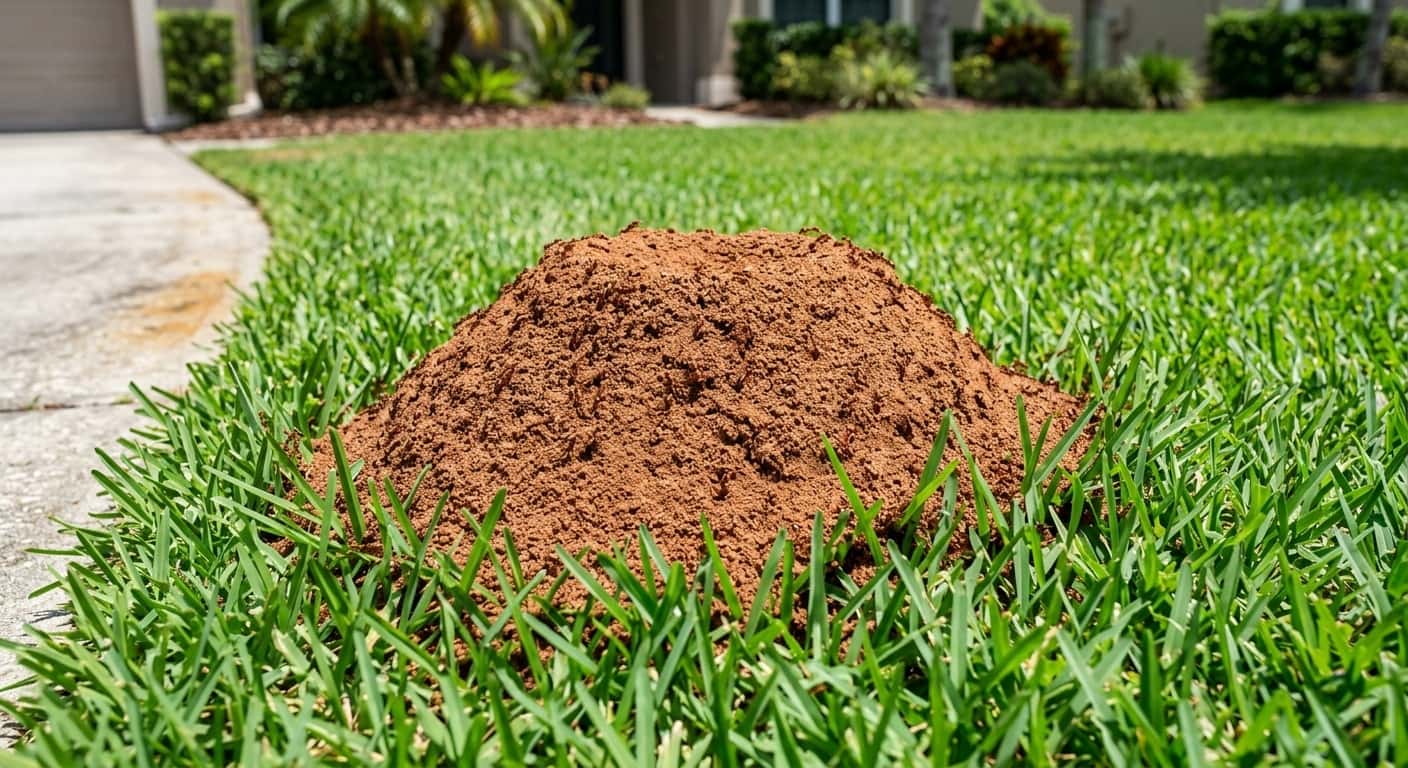
You step barefoot onto your lawn, and within seconds you feel the burning. Dozens of red imported fire ants swarming up your foot, each one stinging repeatedly. It’s one of the most painful and common pest encounters in Florida, and it happens to roughly one-third of the population in fire ant-infested areas every year.
Red imported fire ants (Solenopsis invicta) have invaded approximately 350 million acres across the southern United States, causing billions in annual economic damage. Florida is ground zero. Our warm, wet climate supports year-round fire ant activity, and colonies reinfest treated areas within a month if the treatment isn’t done right.
The good news is that fire ants are manageable with the right treatment plan. The bad news? Most DIY attempts fail because they target individual mounds instead of the colony network. What follows is what actually works.
Key Takeaways
- Fire ant queens lay up to 1,600 eggs per day and live 2-7 years, making colony elimination, not just mound treatment, essential
- The UF/IFAS-recommended “two-step method” combines broadcast bait with individual mound treatment for maximum effectiveness
- Fire ants cause billions in annual U.S. economic damage and send approximately 1-2% of people stung into anaphylactic reactions
- Colonies reinfest within a month after treatment. Ongoing management is necessary, not one-time treatment
What Makes Fire Ants So Difficult to Eliminate?
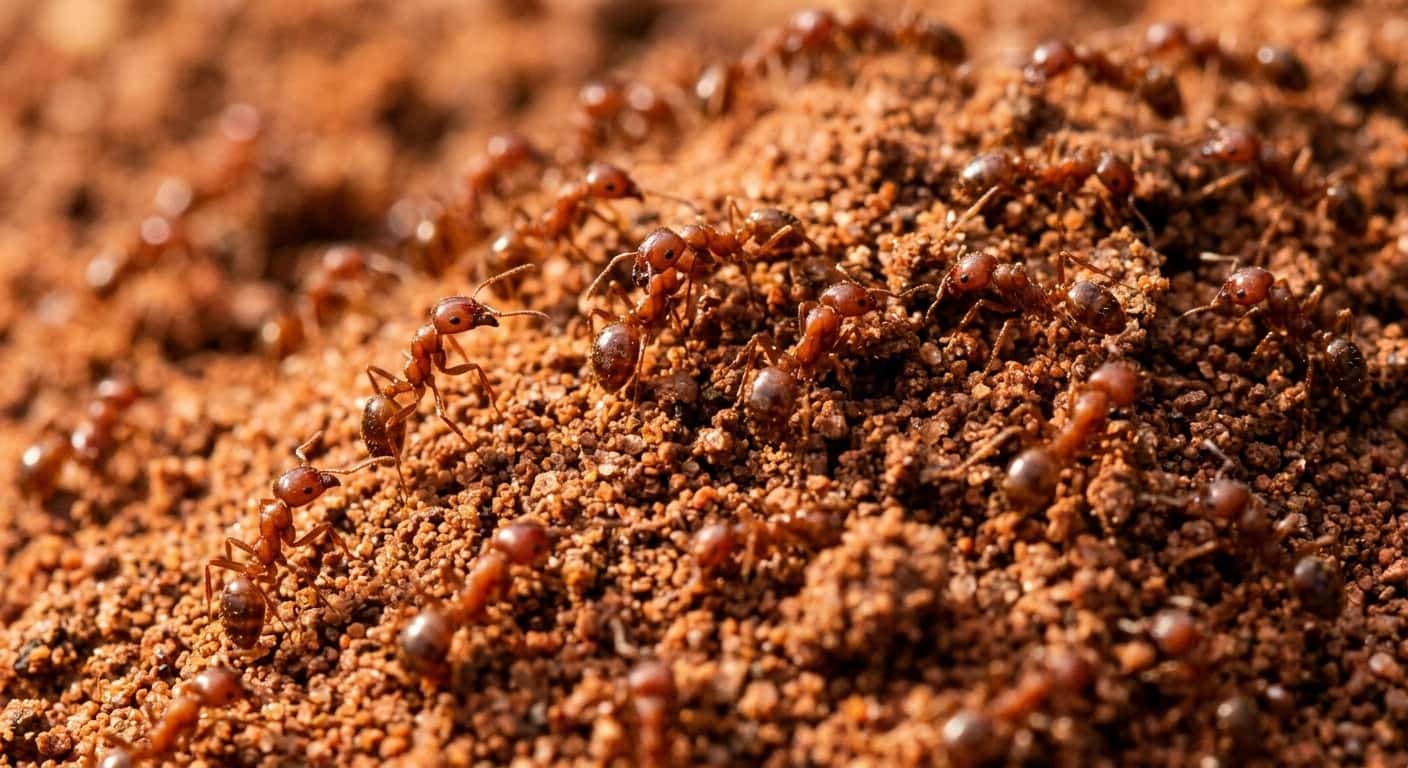
A fire ant queen lays up to 1,600 eggs per day and can continue producing eggs for two to seven years. A mature colony contains 100,000 to 500,000 workers, with some colonies reaching a million individuals. You’re fighting a colony of hundreds of thousands when you pour boiling water on a mound.
Colony Biology Working Against You
Kicking a mound or drowning it with a hose doesn’t work, and the reasons are biological:
- The queen is deep underground. Fire ant mounds can extend several feet into the soil. The queen lives in the deepest chambers, insulated from surface-level treatments. Kill every ant on the surface, and the queen replaces them within days.
- Workers forage over 100 feet from the nest. The ants in your yard aren’t all from the mound you can see. Workers travel long distances, meaning you may have colonies you haven’t even found yet.
- Multiple queens. In Florida, many fire ant colonies are polygyne, containing multiple queens. These colonies spread faster and are harder to eliminate because removing one queen doesn’t collapse the colony.
- Rapid recolonization. Even after successful treatment, fire ants reinfest faster than native ant species. Untreated surrounding areas can develop even greater fire ant populations after treatment pushes them to relocate.
Colony growth is rapid. One year after establishment, a fire ant colony’s population can exceed 10,000 workers, and by three years it can reach 100,000. A single mated queen landing in your yard after a mating flight can establish a new colony that reaches hundreds of thousands of workers within a few years.
How Dangerous Are Fire Ant Stings?
Fire ant stings go beyond pain. They’re a real medical concern, especially in Florida where encounters are nearly unavoidable during outdoor activities.
What Happens When You’re Stung
Fire ants don’t sting once. When a mound is disturbed, workers swarm up your body and sting simultaneously, each ant stinging multiple times. The venom produces an immediate burning sensation followed by a white pustule that forms within 24 hours. The intense itching can persist for up to ten days.
Allergic Reactions and Anaphylaxis
Most people experience only localized pain, swelling, and pustules. But the risk of severe reaction is real.
- Large local reactions occur in approximately 20% of people stung (swelling that extends beyond the sting site)
- Systemic allergic reactions (affecting the whole body) occur in 0.5-2% of people stung
- Anaphylaxis, a life-threatening reaction, can be triggered by a single sting in sensitized individuals
- The sensitization rate to fire ant venom exceeds 90% in heavily colonized regions, which is higher than sensitization to bee or wasp stings
Seek emergency medical care immediately if someone experiences: chest pain, nausea, difficulty breathing, severe swelling beyond the sting site, dizziness, or slurred speech after fire ant stings. People with known fire ant allergies should carry an epinephrine auto-injector (EpiPen).
Who’s Most at Risk?
Children, elderly individuals, outdoor workers, and anyone with limited mobility who can’t quickly move away from a mound are at highest risk. Pets, especially dogs, are frequently stung on paws and muzzles when they investigate mounds.
What we see in Tampa Bay: Children’s playgrounds and school yards are the most concerning fire ant locations we treat. A child who steps on a mound can receive dozens of stings before they understand what’s happening. We recommend inspecting any outdoor play area for mounds before children use it, especially after rain when new mounds appear overnight.
Learn more about the dangers pests pose in our guide to understanding the health risks posed by common household pests.
What’s the Best Way to Kill Fire Ants? The Two-Step Method
UF/IFAS and cooperative extension services across the Southeast recommend the “two-step method” as the most effective fire ant control strategy for residential yards. It works because it addresses both the visible mounds and the colony network underground.
Step 1: Broadcast Bait Application
The first step targets the entire colony network, not just the mounds you can see. A slow-acting bait is spread across the full yard. Worker ants collect it, carry it underground, and feed it to the queen and brood. Because the bait works slowly, the colony doesn’t recognize it as a threat, which means workers keep distributing it throughout the nest before the effects take hold. Broadcast baiting works because it reaches colonies you don’t even know exist, including young colonies that haven’t built visible mounds yet.
The critical factors that determine whether broadcast baiting works or fails are product selection, application timing relative to ant foraging patterns and weather, correct coverage rates, and a consistent reapplication schedule. Using the wrong product, applying at the wrong time of day, or broadcasting before rain can render the treatment worthless. Liberty Pest Management’s fire ant program uses commercial-grade baits and calibrated application equipment to ensure these variables are controlled on every visit.
Step 2: Individual Mound Treatment (3-7 Days After Baiting)
The second step is a targeted follow-up to colonies that survived the broadcast phase. After allowing several days for the bait to circulate through the colony network, any mounds still showing activity receive a concentrated treatment delivered directly into the mound. The two phases work together: the broadcast bait suppresses the overall population, and the individual mound treatment eliminates the holdouts.
Effective mound treatment depends on selecting the right product type for the situation, applying at the correct time of day when the queen and brood are positioned in accessible chambers, and using enough volume to penetrate the full depth of the mound. Improper mound treatment often just scatters the colony, causing it to split and establish new mounds nearby.
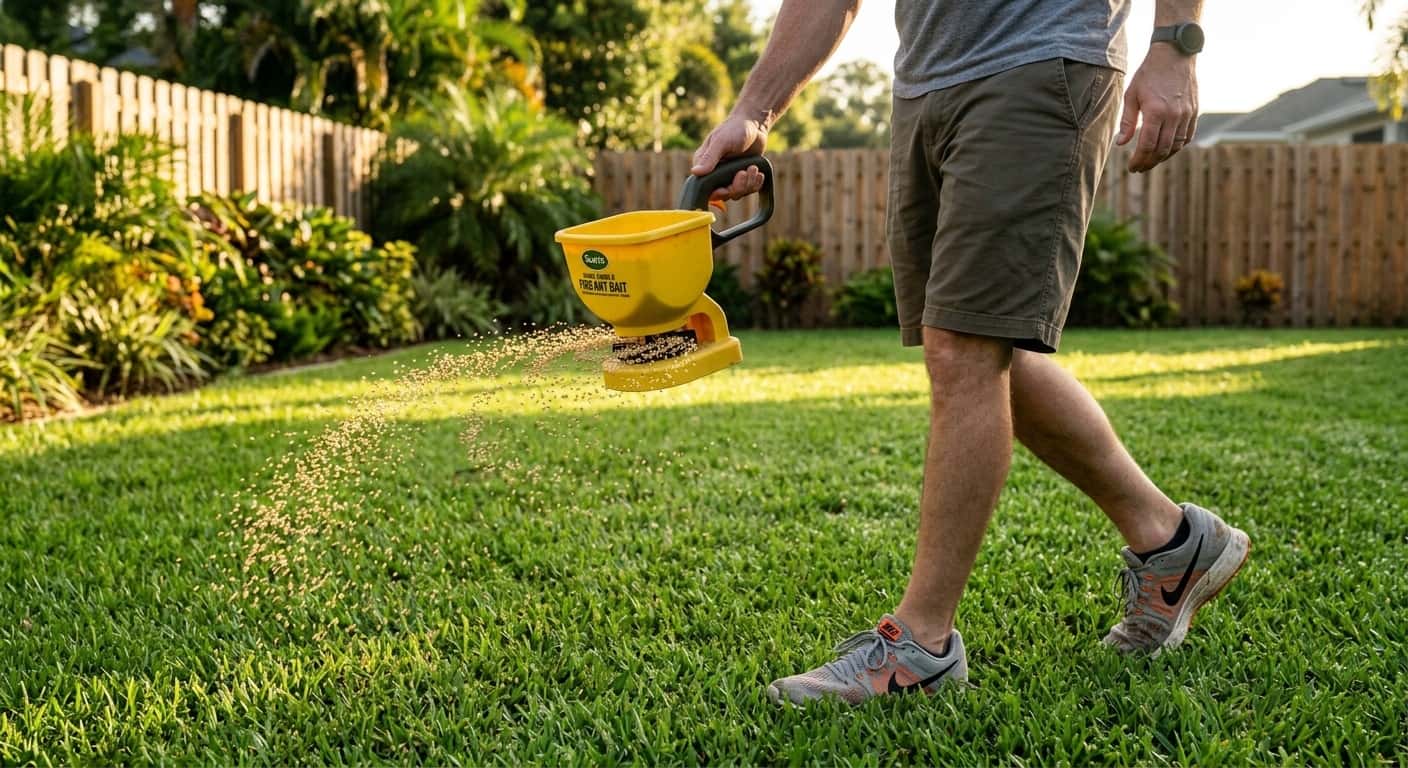
UF/IFAS cautions that broadcast baiting may be counterproductive in areas where native ant species are present, as it decreases native ant populations that naturally compete with and slow fire ant spread. In yards with mixed ant populations, individual mound treatment alone may be the better option to preserve beneficial native ants.
For help deciding whether to tackle pests yourself or bring in a professional, see our guide on when to call an exterminator.
What Fire Ant Treatments DON’T Work?
Myths about fire ant control waste time and money. Skip all of these.
Pouring Gasoline on Mounds
Dangerous, illegal in many areas, and ineffective. Gasoline kills surface ants and grass but rarely reaches the queen. It contaminates soil and groundwater. Never do this.
Club Soda or Grits
The theory that club soda suffocates ants or that grits expand in their stomachs and kill them has no scientific basis. Neither has any documented effectiveness. Fire ant workers are liquid feeders. They can’t eat dry grits.
Flooding with a Garden Hose
Water doesn’t kill fire ants. They can survive flooding by forming living rafts (the same behavior seen during hurricane flooding). Running a hose on a mound just relocates the colony, often closer to your home.
Digging Up the Mound
Disturbing the mound triggers an aggressive swarming response. You’ll get stung dozens of times, and the colony will simply rebuild, sometimes splitting into two colonies, making the problem worse.
One-and-Done Treatments
Any treatment applied once will provide temporary relief. Fire ants reinfest treated areas within a month. Florida’s climate supports year-round activity, meaning ongoing management every 3-4 months is the only way to maintain lasting control.
The myth that costs homeowners the most: “I’ll just treat the mounds I can see.” Visible mounds represent only a fraction of fire ant activity on your property. Workers forage over 100 feet from the nest, and many colonies, especially young ones, don’t build prominent mounds. Broadcast bait reaches colonies you don’t even know exist. Mound-only treatment is reactive. Broadcast bait is proactive.
How Do You Prevent Fire Ants From Coming Back?
Fire ant management in Florida is ongoing, with no permanent one-time solution. But a consistent routine keeps populations low enough that you won’t step on a mound every time you walk to the mailbox.
Quarterly Bait Applications
Fire ant management takes ongoing quarterly treatment to maintain suppression. Colonies reinfest within a month, so a single application, no matter how well executed, provides only temporary relief. Quarterly treatments during the active season (March through November in Tampa Bay) maintain continuous pressure on the colony network and prevent new queens from establishing. Liberty Pest Management’s quarterly service plans include fire ant treatment as standard, ensuring your yard stays on a consistent suppression schedule without gaps.
Monitor After Rain
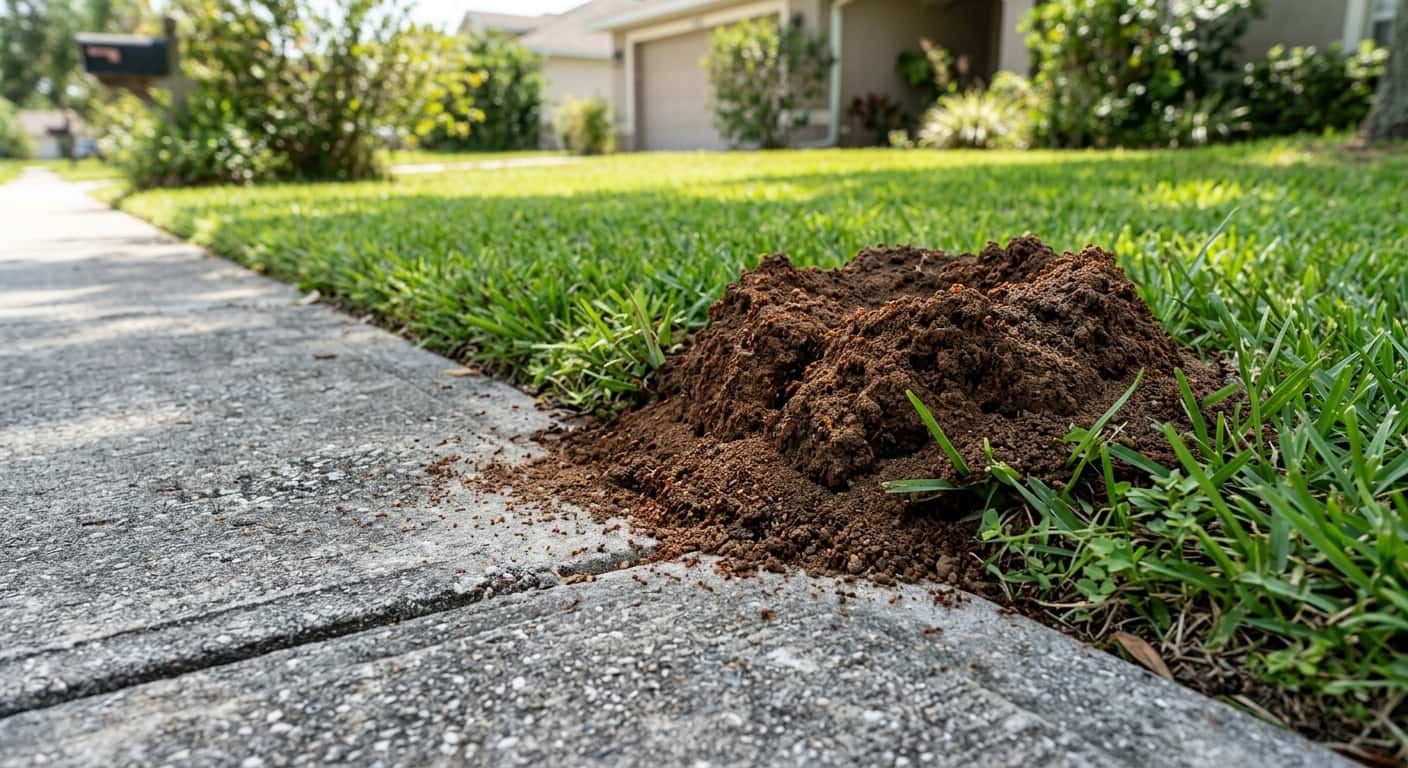
New mounds appear within days of heavy rainfall as colonies expand and new queens establish. Walk your property after every significant rain event and note any new mound activity. Multiple new mounds after a single rain event often signals colony expansion that benefits from professional re-treatment rather than spot fixes.
Maintain Your Lawn
- Mow regularly. Tall grass hides mounds and makes them harder to spot before stepping on them
- Avoid over-irrigation. Saturated soil creates ideal conditions for fire ant nesting
- Manage mulch. Keep mulch thin (2-3 inches) and away from the foundation. Fire ants nest in mulch beds.
Protect High-Traffic Areas
Give extra attention to areas where people and pets spend time:
- Sidewalks and walkways
- Playground areas and swing sets
- Pool decks and patios
- Pet play areas
- Garden beds where you kneel and work
These high-traffic zones benefit from both broadcast bait and targeted mound treatment. A professional service plan ensures these areas receive priority attention on every visit.
For more seasonal yard maintenance advice, check out our guide on how to keep pests out of your Florida home this summer.
When Should You Call a Professional for Fire Ants?
The two-step method is most effective when applied by a licensed professional with commercial-grade products and calibrated equipment. The variables that determine success, product selection, application timing, coverage rates, and reapplication schedule, are difficult to get right without training and proper tools.
Call Liberty Pest Management when:
- You have fire ants in your yard. Professional-grade broadcast equipment and higher-concentration products deliver better suppression than consumer alternatives
- Near-structure mounds. Fire ants nesting inside electrical equipment, under pavement, or against your foundation require specialized treatment to avoid equipment damage
- Allergic family members. If anyone in your household has a known fire ant allergy, professional treatment minimizes exposure risk
- Commercial properties. Schools, parks, HOA common areas, and businesses have liability concerns that require documented professional treatment
- Recurring infestations. Colonies reinfest within a month. Quarterly professional treatment maintains continuous pressure without gaps
Liberty Pest Management’s quarterly plans include fire ant treatment as part of the standard service package. Contact us for a free quote.
Fire ants also nest inside structures, in electrical boxes, HVAC units, and wall voids. When they infest electrical equipment, they can cause short circuits and equipment failure. These situations always require professional treatment from a licensed company like Liberty Pest Management.
Frequently Asked Questions
How fast do fire ant colonies grow in Florida?
A single mated queen can establish a colony that exceeds 10,000 workers within one year and reaches 100,000 by year three. Mature colonies in Florida can contain 100,000 to 500,000 workers. Queens lay up to 1,600 eggs per day and can reproduce for 2-7 years. Florida’s warm climate accelerates growth compared to northern states where cold winters slow colony development.
Can fire ants kill you?
Fire ant stings are rarely fatal, but deaths do occur. A survey by the American Academy of Allergy and Immunology documented confirmed fire ant sting fatalities across southern states, with Florida reporting 10 deaths. Anaphylaxis from fire ant stings occurs in 0.5-2% of people stung. Anyone with a known fire ant allergy should carry an epinephrine auto-injector and seek immediate medical attention after stings.
Why do fire ant mounds appear after rain?
Rain saturates the soil, forcing fire ants to build upward to keep the queen and brood dry. New mounds also appear because rain triggers mating flights, winged queens and males leave established colonies, mate in the air, and new queens land and establish fresh colonies nearby. A single rain event in Tampa Bay can produce dozens of new mounds across a neighborhood within days.
Do fire ants damage homes in Florida?
Fire ants occasionally invade structures, nesting inside electrical boxes, HVAC units, and utility housings where they can cause short circuits and equipment failure. They nest under pavement and building foundations, potentially undermining structural supports. The estimated billions in annual U.S. fire ant damage includes agricultural losses, electrical equipment damage, and medical costs.
How often do I need to treat for fire ants in Florida?
Every 3-4 months during active season (March-November), with treatment after heavy rain events between scheduled applications. Florida’s year-round warm temperatures mean fire ants never fully go dormant, though activity slows during brief cold snaps in December-February. Recolonization after treatment can occur within a month, making consistent quarterly management essential for lasting control.
Ready to get your fire ant problem under control? Get a free quote from Liberty Pest Management today.
Stop Fighting Fire Ants One Mound at a Time
The two-step method works. It’s backed by UF/IFAS research and decades of field results across the Southeast. But executing it correctly takes professional-grade products that aren’t available at retail, precise timing based on soil temperature and foraging patterns, calibrated application equipment, and a consistent quarterly schedule with no gaps.
Liberty Pest Management applies this proven two-step method using commercial-grade baits and mound treatments that deliver longer-lasting suppression than consumer products. Our quarterly service includes broadcast bait application across your entire yard, targeted mound treatment for active colonies, and post-rain monitoring during peak season.
Your yard doesn’t have to be a minefield. Consistent, professional treatment changes the equation.
Schedule a free inspection with Liberty Pest Management to take the first step toward a fire ant-free yard.
Liberty Pest Management serves the Tampa Bay area including Odessa, Trinity, Land O’ Lakes, Wesley Chapel, and surrounding Pasco County communities. Licensed by the Florida Department of Agriculture (JB-151032). Call us at 813-961-2627 or get a free quote today.